


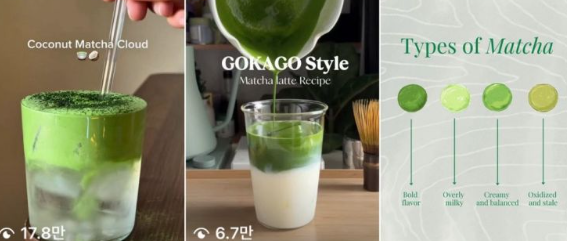
The interest of the MZ generation, which pursues both health and gastronomy at the same time, and the trend of “Healthy Pleasure” are becoming a premium food culture. The New York Times (NYT) and others reported on this matcha craze on the 24th.
Matcha, a luxury tea used in tea ceremony in Japan, is made in powder form by finely grinding green tea leaves. The production process is much more difficult than regular leaf tea, and the higher the quality, the more effort you have to put into it. Leaves must be grown out of direct sunlight, and it takes a lot of time to grind with a special millstone after harvest. Because of this, only about 50 grams per hour is produced.

Matcha is rich in vitamin C, vitamin E, and beta-carotene, as well as catechin, which is an antioxidant. The antioxidant effect is 15 times that of blueberries, and recently it has become popular as blood sugar control and diet effects are known. In addition to these health effects, matcha lattes, ice cream, and desserts have become popular on social networking services (SNS) such as TikTok and Instagram, especially among people in their 10s and 20s. The certification was also largely influenced by celebrities such as Hayley Bieber and Zendia. One consumer said, “I set notifications and pay at midnight as if I were buying limited edition sneakers.”

But supply is not keeping up with demand. Japan’s luxury car brand “Sajenti” says monthly sales have quintupled in a year, but “it simply cannot keep up with demand,” and some brands are taking emergency measures such as limiting purchases, raising prices, and halting sales. There has even been a paid notification service.
In Japan, the main producer of matcha tea, the “Tencha” produced only 4,600 tons of green tea leaves. This is far less than that of Sencha (over 40,000 tons), a regular leaf tea. Moreover, since most production farms are run by families centering on the elderly, it is not easy to expand their production.
“It takes more than five years to expand farms or build new factories,” said Anna Poine, director of the Global Association of Japanese Tea Associations. “Farmers are not sure because the matcha boom may be a temporary fad.”
Some are skeptical about whether the matcha trend will continue. As quality maintenance and sincerity are essential for matcha production, there are concerns that the Japanese traditional tea industry could shrink if it fails to keep up with the pace of trend consumption.
JULIE KIM
US ASIA JOURNAL

