


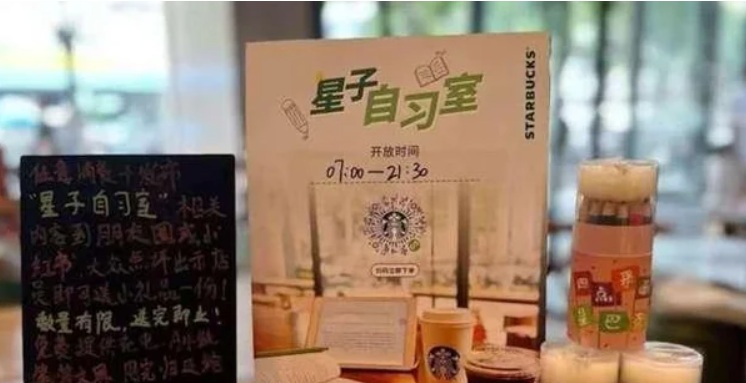
Amid the controversy over those who stay in cafes and study for a long time, Starbucks is believed to have taken a new approach to resolve the conflict and increase consumer convenience.
According to Starbucks China on the 23rd, it recently announced that it has set up self-study spaces in some stores, including Guangzhou and Shenzhen in Guangdong Province.
The region is an economic and trade center where information technology (IT) companies, research institutes, and universities are concentrated, and there is a high demand for study spaces.
Starbucks China said on its official social network (SNS), “We plan to provide consumers with a space to study in the hot summer season,” adding, “We plan to continue interesting attempts using space in more stores in the future.”
He added, “In the future, I hope that more of our stores will become spaces for various hobbies, and coffee will be with your time and hobbies.”
In fact, some stores in major cities in Guangdong Province have study rooms. A table for one person was placed on the window or one wall inside the store to be designated as a learning space, and users can use it freely without additional fees or time limits. Outlets, wireless internet, bottled water or hot water are also provided free of charge.
The service is open to anyone and can be used simply by purchasing coffee without a prior reservation.
Many reviews have been posted on social media to welcome this, but some are concerned that they are “worried that they will continue to occupy their seats.”
There was a similar controversy in Korea. In June, Sungshin Women’s University Professor Seo Kyung-duk expressed concern over a culture that even foreigners cannot understand, citing the example of people setting up partitions at a Starbucks and staying away for a long time.
In fact, related photos posted on social media also drew attention from overseas communities, and Professor Seo said, “It is a nuisance to act like a private space in a public place,” describing his experience of witnessing similar scenes during meetings with foreigners.
Starbucks’ attempt in China is attracting attention as a realistic solution to prevent such spatial conflicts in advance and accommodate learning needs.
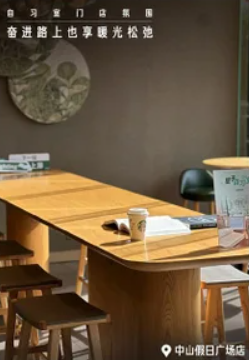
Starbucks, which entered China in 1999, operates 7,758 stores across the country. However, it has struggled in the competition with Luckin Coffee, the No. 1 coffee brand in the country.
In fact, Starbucks’ sales in China have been on the decline for the last four consecutive quarters, and some have even raised rumors of a sale.
As a result, Starbucks China is striving to secure consumers by lowering the prices of some beverages and introducing sugar-free options. The operation of the study room is also interpreted as part of a differentiated strategy to recover performance.
JENNIFER KIM
US ASIA JOURNAL

