


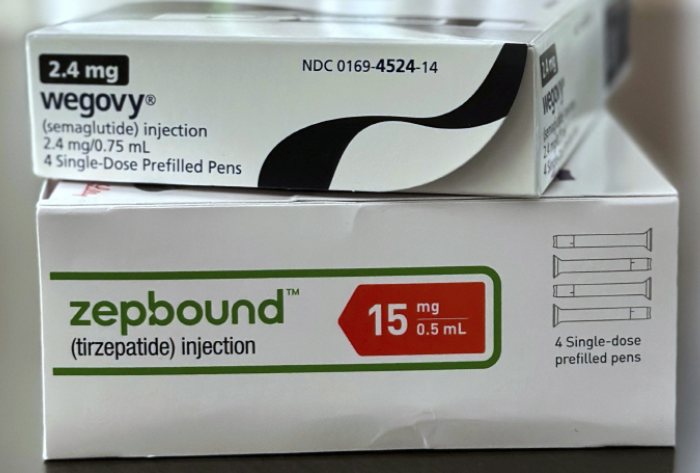
Semaglutide and tirzepatide, a second-generation glucagon-like peptide-1 receptor agonist (GLP-1RA) used to treat diabetes and obesity, lower the risk of dementia by 37% and the risk of death from all causes by 30%, according to a study.
Professor James Audience Wei of Zhongshan Medical University in Taichung, Taiwan, said in the Journal of the American Medical Association (JAMA Network Open) on the 16th that this result was obtained from a study on the effects of GLP-1R agents and other treatments on dementia and mortality in 60,000 diabetic and obese patients in the United States.
The research team said the results show that GLP-1R agonists are associated with reduced dementia, stroke, and overall mortality in patients with type 2 diabetes and obesity, suggesting the possibility of these drugs protecting nerve and cerebrovascular relationships.
They pointed out that the effects of second-generation GLP-1R agents such as semaclutide (diabetic drug Ozempic, obesity drug Hugobee) and tirzepartdi (diabetic drug Mounjaro, obesity drug Jebbound) on neurodegenerative diseases or cerebrovascular diseases are not yet clear.
In this study, the research team analyzed data from 68,660 patients with type 2 diabetes and obesity registered in the TriNetX US network over 40 years of age and no history of neurodegenerative and cerebrovascular diseases (December 1, 2017 to June 30, 2024).
30,430 patients received semaglutide and tirzepad, and the remaining 30,430 patients (average age of 58.0 years) received other treatments (such as biguanide and sulfon urea), and follow-up data included dementia, Parkinson’s disease, ischemic stroke, intracerebral hemorrhage, and overall mortality.
As a result of the analysis, the risk of dementia was 37% lower in the semaglutide and tirzepatide group than in other treatment groups during the 7-year follow-up, and the risk of stroke was 19% lower.
In addition, all-cause mortality was analyzed to be 30% lower in the GLP-1R agonist group than in the other treatment group.
The effects of semaglutide and tyrzeptide on reducing dementia, stroke, and mortality were greater in patients over 60 years of age, in women, and with a body mass index (BMI) of 30–40. However, no significant association was found between these drugs and the risk of Parkinson’s disease and intracerebral hemorrhage.
The research team said the results show that second-generation GLP-1R agents such as semaglutide and tirzepatide are associated with a reduced risk of dementia and stroke and overall mortality in patients with both type 2 diabetes and obesity.
This suggests that GLP-1R agonists are likely to protect nerves and lower the risk of cerebrovascular disease beyond blood sugar control, he said, adding that additional clinical trials are needed to confirm this.
JULIE KIM
US ASIA JOURNAL

