


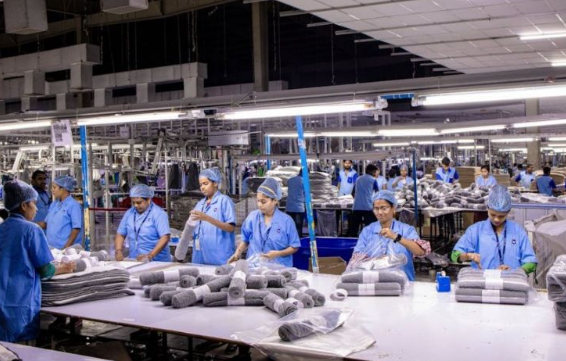
It is argued that the influx of low-wage foreign workers in Japan is a factor that suppresses Japanese wage increases. Japanese politicians are making such remarks in the upper house election, and Japanese media even cite experts to check the facts.
On the 19th, Japan’s Mainichi Shimbun reported, “Is it true that if the number of foreigners increases, Japanese wages will not rise? Ask experts.” According to the report, some political parties in the upper house election have repeatedly argued that “the Japanese’ wages will not rise if the number of foreign workers increases.” “In terms of data, foreign workers work at about 70 percent of the Japanese’ wages,” said Naoki Hayakuda, the leader of the Conservative Party. “If the cheap labor force continues to come in, of course, Japanese wages will not rise.” “If there is a shortage of workers, we raise wages and attract people, but if the supply increases, wages naturally fall,” said Minetori Kamiya, the leader of the ruling party. “On average, foreign workers work at about 30 percent cheaper wages than Japanese. It is considered a cheap labor force.”
It is true that the average salary of foreigners is 70% of that of Japanese. According to the 2024 Basic Wage Structure Statistics Survey by Japan’s Ministry of Health, Labor and Welfare, the average monthly salary of ordinary workers (excluding overtime pay) is about 330,000 yen. On the other hand, foreign workers are about 240,000 yen (3.3 years working period), which is about 70% of that of ordinary workers. The average salary of ordinary workers is on a gradual rise, up about 30,000 yen compared to 2014. In addition, according to the Ministry of Health, Labor and Welfare’s foreign employment status, the number of foreign workers is increasing every year, and by the end of October 2024, the number of foreign workers had reached an all-time high of 2.32,587.

Mainichi asked two experts. Regarding the difference in average wages between foreigners and Japanese people, Yuu Korekawa, head of the International Relations Department at the National Institute for Social Security and Population Studies, said, “Most of them are just due to external factors such as young foreigners or small companies.” “The gap with Japanese people who work in the same workplace is not big,” he said. “The claim that Japanese people’s wages do not rise when the number of foreign workers increases has not been proven.” “The trend of the number of working-age people decreasing by 400,000 to 1 million every year over the next 50 or 100 years remains unchanged,” he said. “Even if we accept 300,000 foreigners a year, there will be more jobs that are short-handed. Therefore, it is difficult to say that the increase in foreign workers directly affects Japanese wages.”
Aoyama Gakuin University Professor Akinori Tomohara said of politicians’ claims, “The specific conditions such as the size of foreign workers have not been presented, and from an economic point of view, it cannot be concluded,” adding, “A number of factors, including the global economy and internal reservations of companies, are intertwined. Foreign workers are just one factor.”
EJ SONG
US ASIA JOURNAL

