


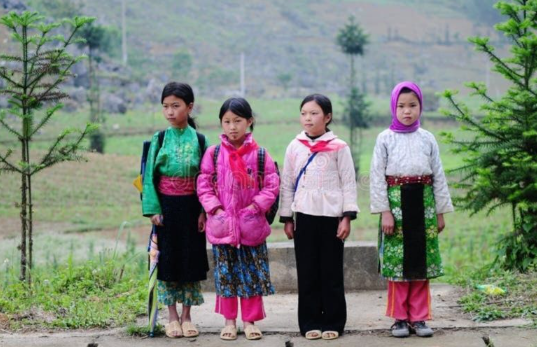
It is an unusual policy direction aimed at simultaneously recovering the fertility rate and breaking down the preference culture for boys, with measures aimed at both the low birth rate and the serious gender imbalance.
According to a statement from Vietnam’s Ministry of Health on the 15th, Health Minister Dao Hong-ran unveiled the policy’s direction for the first time at a World Population Day celebration in Hanoi on the 11th, saying, “We are preparing a new policy framework to respond to population problems at the regional and national level.”
Major measures proposed by the Ministry of Health include incentives to raise children, support for health checkups before and after childbirth, and subsidies for housing expenses for families with children, as well as giving special incentives to “family with only daughters.” Such policies are having a significant impact in Vietnamese society, where a long-standing culture of favoring sons remains.
Vietnam’s total fertility rate in 2024 was 1.91 per woman, below the level needed to maintain the population for the first time. At the same time, the birth gender ratio is 111.4 boys per 100 people, far exceeding the natural gender ratio (105:100), indicating that the avoidance of girls remains.
This is not the first policy intervention to correct this imbalance. The Vietnamese government has been campaigning for years to improve the preference culture for boys, but it is analyzed that deep-rooted traditions remain in rural areas and some ethnic minority areas.
The Ministry of Health said teenage pregnancies, early marriages and inbreeding are still frequent, especially in the central highlands and northern mountainous regions, with this type of birth accounting for 21.9% of the total. This is interpreted as a result of a combination of lack of education and vulnerability to local health infrastructure.
In addition, Vietnam is also rapidly aging. Although the average life expectancy is increasing, the average age of healthy survival is only 65, and a significant number of the elderly live with chronic diseases.
Accordingly, the Vietnamese government announced the establishment of a comprehensive national health and population plan from 2026 to 2035. The plan will include mandatory pre-marriage health checkups, support for treatment of congenital diseases, strengthening the elderly care system, reducing tuition or expanding scholarships for elderly medical students.
SAM KIM
US ASIA JOURNAL

