



China’s white liquor industry is taking on a new challenge, defying its traditional “high frequency” image. According to Beijing Sangbo, a Chinese state-run media, a “low-degrees revolution” has begun in the white wine market, with major white wine companies such as Blue Jays and Luzhou Lao Zhao announcing the launch of new products with alcohol levels below 29 degrees Celsius. Low-degrees were steadily being released in the Chinese market, but this is the first time for a high-end white wine brand to launch low-degrees. Low-degrees are rapidly growing in the white wine market in China.
Young consumers are at the core of the growth. According to the 「Innovative Research Report by the Young Generation of Liquor and Chinese Liquor Item」 published by the Chinese Liquor Association, 34% of white liquor consumers are in their 20s and 30s, with a whopping 490 million potential young liquor consumers in China.
Nonetheless, white liquor is not the most preferred choice among young people. According to a survey of 1,000 respondents across the country conducted by Blue Ye, only 19 percent of respondents aged 20 to 35 said they like white liquor the most. It is far behind beer (52 percent) and fruit wine and brew (29 percent). In particular, high-water white liquor had high resistance to alcohol stimulation, and its preference for low-water product exceeded 60 percent.
The white wine industry is actively adjusting the product by reducing the frequency of its products, reflecting the youthful appearance in the bottle design, and adjusting the flavor smoothly. “It is time to reinterpret the white wine experience in line with the values and consumption patterns of the younger generation,” said an official from the company.
Chinese experts also believe that such changes can change the industrial structure itself beyond short-term trends. “Low capital stocks can become a key market for the white liquor industry in the future,” the China Business Daily said. “The combination of product power and distribution strategy can be a new growth engine.”

However, the low-dose wine market also faces challenges. “Due to the nature of low-dose wine, alcohol stability is low, which can lead to flavor degradation and turbidity during long-term storage,” said Zhong Yanfuhua Research Institute of Industrial Economics and Trade in a recent report. “The challenges to overcome are the quality gap between brands and the ambiguity of their identity due to excessive fruity or carbonation.” In the past, most Chinese white liquor had an alcohol content of over 60 degrees Celsius. The development of low-dose white liquor started in earnest in the 1970s. Based on Huarogeng’s “priority method,” the company successfully lowered its existing 52-degree product to 38 degrees Celsius and 35 degrees Celsius. Notably, the 25-degree blue wine developed in 1991 was recognized as a silk with the lowest alcohol content at the time, receiving the national gold medal.
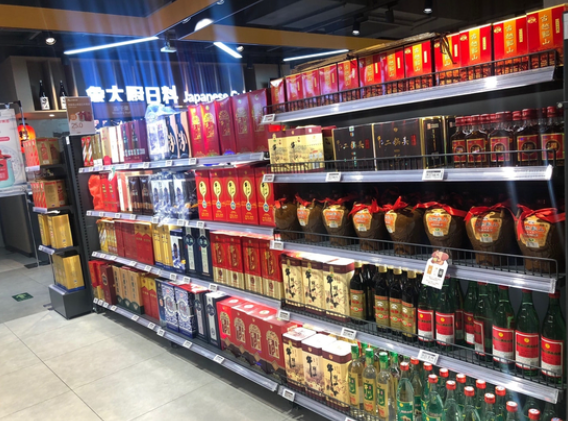
However, the so-called “low-intensity white liquor” that has been released in recent years is still concentrated at over 30 degrees Celsius. Examples include 43-degree Mao-tai, 39-degree blue wine, and 38-degree diplomatic relationship 1573. Among high-end white liquor, products under 30 degrees Celsius are still difficult to see on the market.
Currently, there is no official standard for low-dose alcohol in China. Some companies are considering developing 16-degree or even 6-degree products. Technically, low-dose alcohol requires high-level fermentation and distillation technology, not just dilution. Low-dose alcohol has a higher technical difficulty because it needs to maintain its flavor without reducing the taste of alcohol. According to the Korea Customs Service, China (19.9 percent) became the largest exporter of Korean soju after the U.S. (24.3 percent) last year. The export structure, in which soju was concentrated in Japan in the past, has now diversified to 95 countries including the U.S. and China. Amid this development, attention is focusing on whether low-dose alcohol trends spreading in China will provide the industry with an opportunity to enter new markets.
SALLY LEE
US ASIA JOURNAL

