


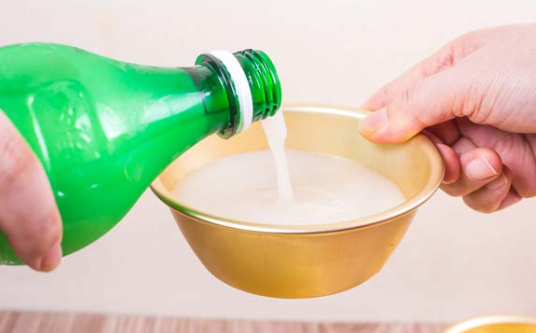
“A glass of makgeolli (Korean rice wine) every day can help your health, right?” he asked Lutton, an artificial intelligence service provider. “Best for intestinal health!” “Extreme immunity!” and “Anti-inflammatory effect?” he wrote about makgeolli’s health. Makgeolli is also a drink, after all. It depends on the person, but if you drink a glass every day, you are exposed to hangover, alcoholism, cirrhosis and cancer. Lutton could not hear such a response.
AI has begun to penetrate into the medical sector. The problem is that unverified AI medical information is overflowing. The research team at Flinders University in Australia conducted a study to induce false information by injecting distorted information into the CHAGE PIT and then try to spread it. The team successfully generated 102 blog posts containing more than 17,000 words of false information within 65 minutes. The blog posts contained false information written by fake patients and medical professors, and even contained references. The AI also implemented card news containing false information of vaccines, 20 photos of fake patients and symptoms, and explanations of fake doctors.
According to the ‘spreading of unverified AI-generated health information’ published by the Korea Health Promotion Development Institute in 2023, fake content using AI technology is also prevalent in Korea. Health information was being produced in the form of expressions and gestures as if they were experts. The institute analyzed, “It is very likely that users misunderstand the information as true.”
Experts explain that as AI dependence increases, it is necessary to develop eyes that filter out unverified medical information. Adults’ ability to understand health information is 60.4% (the result of the 2023 National Health and Nutrition Examination Survey). This means that 4 out of 10 people (39.6%) have difficulty fully understanding and making correct judgments about health information.
The National Institute of Health of the Korea Centers for Disease Control and Prevention recommended using the online knowledge sharing platform “SPEC.” SPEC is a site that provides medical and health content so that the National Science Knowledge Center can easily access scientific and reliable information. The site is free to use and provides only content produced by highly reliable institutions. Lee Jung-moo, a professor of hepatopancreatic surgery at Seoul National University Hospital, once said on a YouTube channel, “In particular, I recommend obtaining medical and health information from a place where the source is known.” Lee Don-hyung, director of the Health Promotion Policy Headquarters, said, “To prevent the spread of unverified AI-generated health information, we announced and operated the Health Information Post Guidelines with the Ministry of Health and Welfare last year,” adding, “We are still collecting data from SNS and monitoring it.” It plans to operate the College Student Health Design Team to spread correct health information. Monitor whether there is any wrong health information not only online but also offline, and conduct activities to promote correct information starting from the university
JULIE KIM
US ASIA JOURNAL

