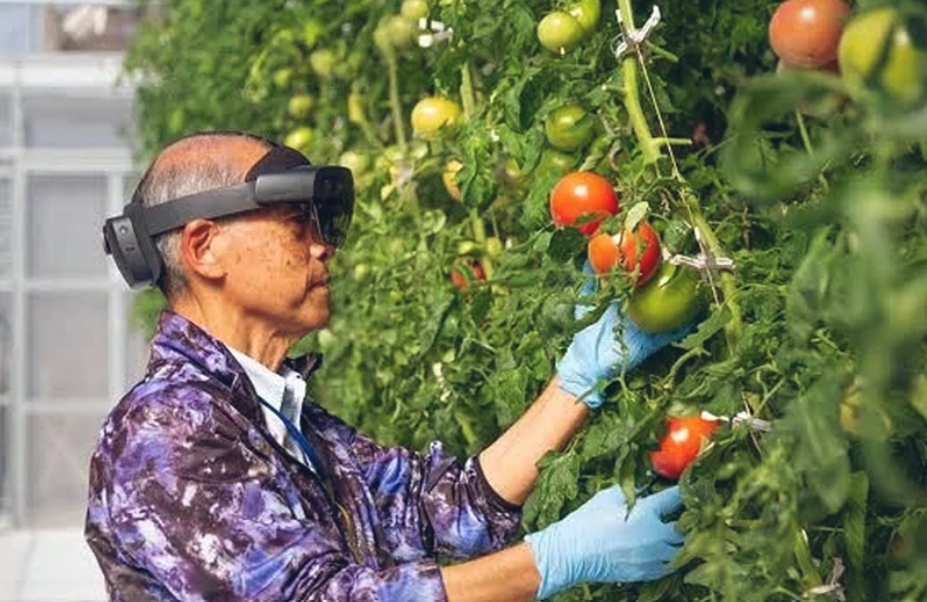
“We are developing various smart agricultural technologies to overcome Japan’s population decline and rural aging with technology,” said Honma Kesuke, deputy chief of the technical policy office of Japan’s Ministry of Agriculture, Forestry and Fisheries, in an interview with the Seoul Economic Daily at the government building of the Ministry of Agriculture, Forestry and Fisheries on the 26th of last month.
In 2013, when Japan established a research organization to realize smart agriculture, it took the first step in smart agriculture. The demonstration project was carried out in 2019, and it has been six years since the field application was carried out. Currently, a total of 217 regions are promoting smart agriculture projects. There are various applications, including drone pesticide and fertilizer spraying, self-driving tractors, remote lawn mowing, transportation robots, and crop management systems.
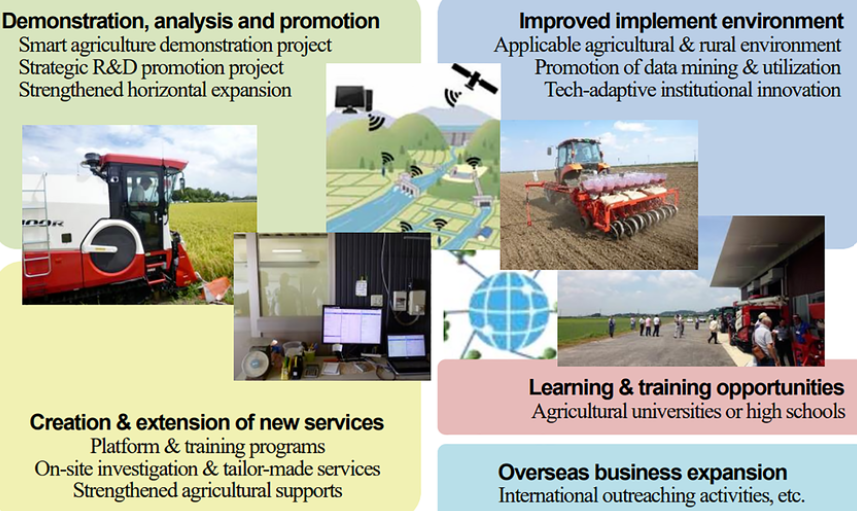
“Smart agriculture has reduced working hours and improved crop production and production quality,” said Yoshihiro Kayano, assistant manager of the Agricultural and Fisheries Research Promotion Division. “It is an important achievement that those who are not familiar with agricultural work can do the same work as skilled workers.”
As of 2022, Japan’s agricultural population is 1.16 million. Of these, 79.6% or 926,000 people are in their 60s or older. “In 20 years, the agricultural population is expected to decline to a quarter of the current level,” said Honma, assistant manager of the department. “We want to increase the effectiveness of smart agriculture to improve productivity per capita.” “Since we have to respond to environmental changes, developing technologies with low environmental load is also being promoted as a field of smart agriculture,” he said.
Cooperation with various agricultural entities is also taking place. The JA Nishimikawa in the central part of western Japan is leading the smart agricultural education project for farmers. JA Shikaoi in Hokkaido is running a harvesting agency service through a cabbage harvesting robot. “The area where smart agricultural development has not yet been put to practical use is the harvesting area such as vegetables and fruit trees,” Honma said. “The intensive development in this area is necessary.”
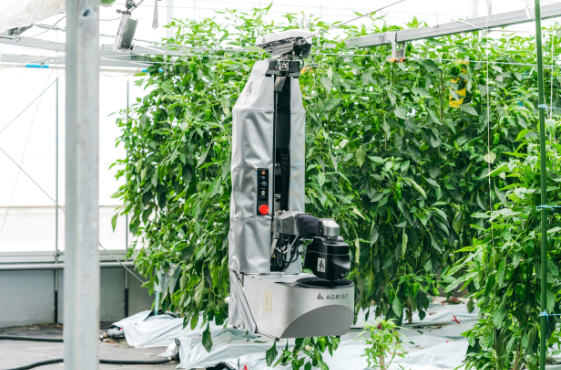
However, challenges still remain. Robots are relatively expensive. Each harvesting robot costs 6 million to 8 million yen, which is a difficult price to purchase realistically without government support. Currently, it is only sold in Japan, making it difficult to mass-produce, which is another factor that makes it difficult to lower the unit price. It is also considering ways to expand its market by cooperating with foreign countries such as Korea.
It is also difficult to distribute robots to aging rural areas. As most farmers are elderly, even if they actually see machines and learn how to use them, they will have difficulty using them in the field. The shortage of AI talents in the agricultural sector is also an issue to be solved. “The shortage of talent is quite difficult even in Japan. As agricultural high schools are not teaching AI robots yet, securing continuous development of human resources is one of the biggest problems,” CEO Hatta said.
SALLY LEE
US ASIA JOURNAL