


Elon Musk’s electric vehicle company Tesla took the first step toward self-driving robot (unmanned) taxi service on the 22nd.
Tesla began a trial run for a paid robotaxi service in Austin, Texas, on the afternoon of the same day.
CEO Musk said on his social media (SNS) X earlier in the day, “The robotaxi service will start in Austin this afternoon. Passengers will pay a flat rate of $4.2.”
Tesla deployed about 10 vehicles on the day to provide robotaxi service to a small number of social media influencer in a limited area. These social media influencers released their first boarding videos on X one after another.
Tesla investor and SNS influencer Sawyer Merritt posted a video on X of him calling a vehicle with a robo-taxi app and moving it to a nearby restaurant.
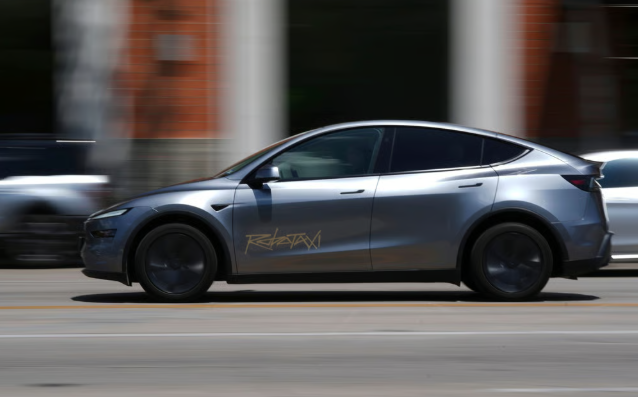
Musk officially declared “the launch of Robotaxi” and called it “the fruit of 10 years of hard work.”
“Both AI chip and software teams are self-organized teams inside Tesla from the beginning,” he said. “They did a really good job of maximizing the performance of Tesla AI computers, and without them, Robotaxi would not have yet been realized.”
X also posted a photo of Musk celebrating the launch of a robotaxi with these teams.
Reuters reported earlier in the day that a Tesla vehicle with no one in the driver’s seat was seen driving with a “Robo Taxi” sign in downtown Austin, adding that it was not confirmed whether passengers were on board.
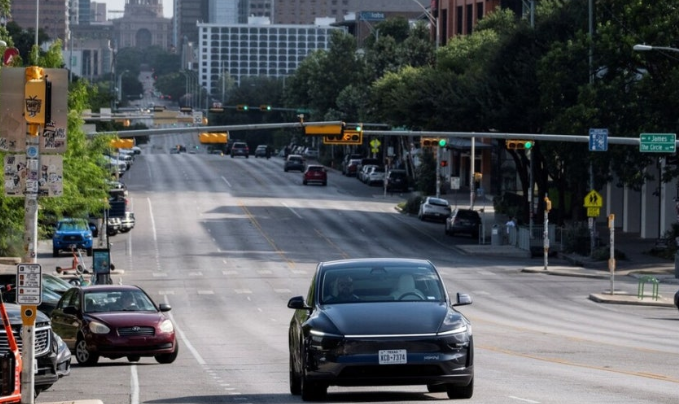
On this day, robo-taxi reportedly operated in a limited area, avoided complex intersections, and was waiting for an operator who intervened remotely in case of an accident. “As planned, we will start operating a fully autonomous robo-taxi in Austin in June,” Musk said in a conference call in April at the first quarter of the service, saying it may be small on the first day of the service, but it will “grow the scale quickly.”
He also stressed that “by the end of this year, we will expand our service to other cities in the United States, and there will be millions of Tesla that will be fully self-driving in the second half of next year.”
With the test drive, Tesla has already challenged Google’s Waymo, which is the most advanced in the robotaxi service.
Waymo is operating in San Francisco, Los Angeles (LA), Silicon Valley, and Phoenix, and plans to enter eastern regions such as Washington, DC next year. Already, paid boarding has exceeded 10 million, and paid driving has reached 250,000 per week.
Amazon’s self-driving unit, Zoox, recently opened a robotaxi production facility in California. With limited operation in San Francisco and Las Vegas, Jukes is planning to launch an official service in the future, heralding competition.
Tesla has started piloting a small robotaxi this time, but there is a long way to go before the rapid expansion.
“It may take years or decades for self-driving competitors such as Tesla and Waymo to fully develop the robotaxi industry,” said Philip Koopman, a professor at Carnegie Mellon University. “Tesla’s successful pilot operation is not the end, but the beginning.”
JENNIFER KIM
US ASIA JOURNAL

