



With the U.S. effectively intervening in the war between Israel and Iran by airstrikes on three Iranian nuclear facilities, the possibility of expansion in the Middle East and the consequent global economic repercussions are showing signs of intensifying.
The Ministry of Trade, Industry and Energy held a “comprehensive situation inspection meeting on the situation in the Middle East” presided over by Vice Minister Choi Nam-ho in Seoul on the 22nd to discuss the impact of the U.S. attack on Iran’s nuclear facilities on domestic energy, trade and supply chains.
At the meeting, the Ministry of Industry focused on the supply and demand of crude oil and liquefied natural gas, as well as the normal operation of oil tankers and LNG carriers sailing in the Middle East. “We are currently securing sustainable reserves for about 200 days and gas stocks that exceed the legal reserve obligations,” an official from the Ministry of Industry said. “We are checking the scenario for a response to an emergency.”

According to major foreign media, including local media, the U.S. conducted airstrikes on three major Iranian nuclear facilities. U.S. President Donald Trump previously said on his social media Truth Social, “We have completed very successful attacks on three Iranian nuclear facilities, including Fordo, Natanz, and Isfahan.”
As the U.S. intervenes directly with Iran’s nuclear facilities, there are growing concerns over a surge in international oil prices. Right now, international oil prices (Dubai oil) hit 74.7 U.S. dollars per barrel this week, up 6.6 dollars from the previous week. Mid-term to long-term international oil prices are expected to continue their upward trajectory due to increased risks in the Middle East.
Domestic oil prices are also on the upward trend as international oil prices rise. Domestic gasoline prices have shifted upward for the first time in six weeks since the second week of last month. In the case of international oil prices, it is inevitable that gasoline and diesel prices will rise for the time being, considering that they are usually reflected in domestic petroleum product prices after two to three weeks.
The petrochemical industry is also closely watching the impact of Middle East risks. If the price of naphtha, an intermediate oil refined from crude oil, rises, the cost burden could increase that much. With the forward industry sluggish, it is difficult to expect a reversal of earnings if the cost burden increases.
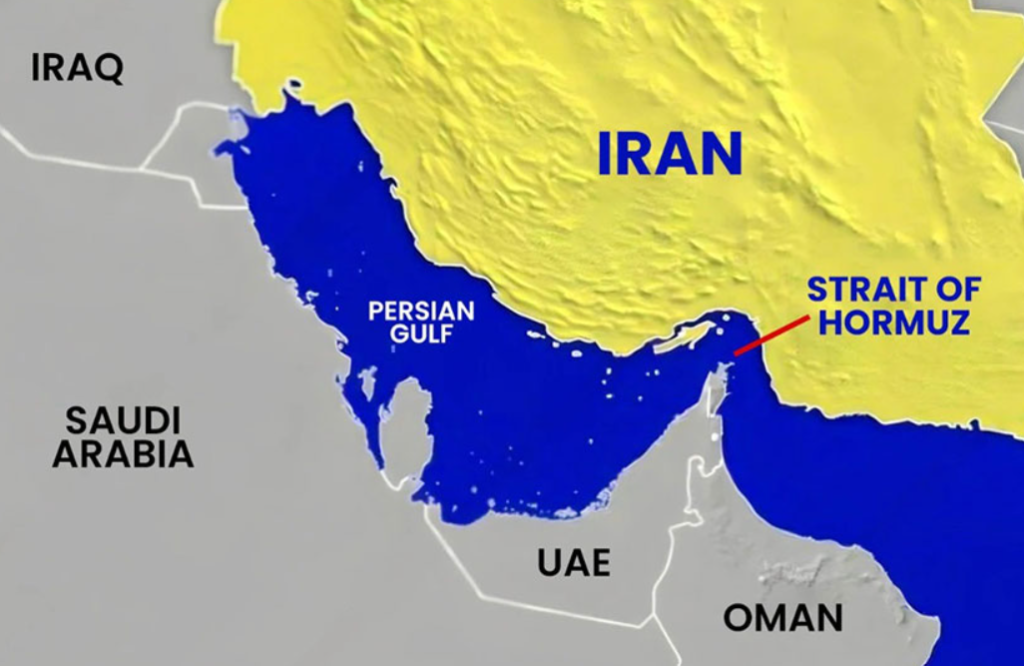
The shipping industry is also on alert. The possibility cannot be ruled out that the Strait of Hormuz, a major oil transport route, will be cut off. The Strait of Hormuz is a must-go route to and from major Middle Eastern countries along the Persian Gulf coast, including Saudi Arabia, the United Arab Emirates, and Qatar. If this place is blocked, the burden of logistics costs on exporters could increase, worsening profitability.
The U.S. airstrike is significant in that it could lead to a direct armed conflict with Iran, a powder keg in the Middle East. In particular, there are warnings that Iran’s blockade of the Strait of Hormuz, a major oil transportation route, could significantly disrupt global oil supply and lead to a surge in international oil prices.
SAM KIM
US ASIA JOURNAL

