


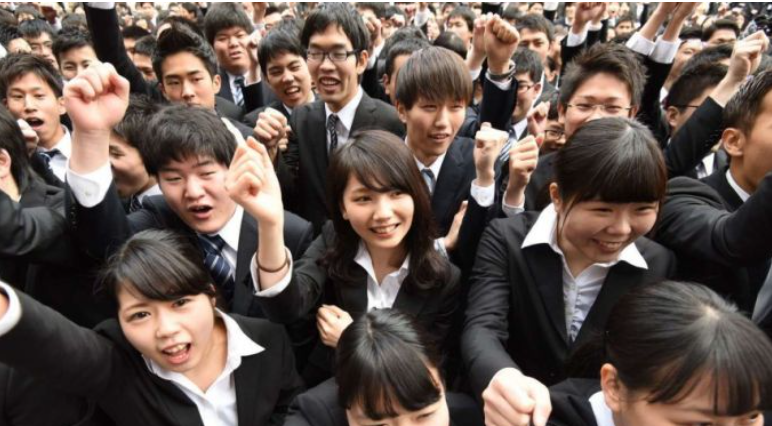
The Nihon Keizai Shimbun reported on Sunday that younger employees are increasingly taking early leave of their jobs, emphasizing “Taifa.” “Taifa” is a new Japanese term that adds “time” to the price position in the newly coined term “Cost Performance,” which refers to cost-effectiveness. In Korea, the term “time-to-time performance” is used.
Citing a study by a Japanese company that supports recruiting and fostering talent, Nikkei analyzed, “There are cases of ‘Taifa turnover’ in which young people give up early even though they have a chance to grow with their career in the company.” They say there is an ‘environmental comparison pattern’ in which young people feel anxious and anxious about whether they are wasting their time compared to the same generation, and find a more suitable environment.
According to an announcement by Japan’s Ministry of Health, Labor and Welfare, the turnover rate of college graduates within three years in 2021 was 34.9%. In other words, one in three new college graduates will leave their jobs within three years. According to the ’employment white paper 2025′ of Japan’s ‘Recruit Employment Future Research Institute’, nearly 40% of new employees regretted that ‘they made easy decisions about their jobs’, and 65.8% said they did not know the standards of their jobs that are important to them.
It is estimated that such “Taifa turnover” has a perception that even if one leaves the company first, one can find another job soon. According to Nikkei, the employment rate of college graduates who graduated in the spring semester reaches 98 percent this year. There is also a perception that the younger one is, the easier it is to increase wages through job turnover. As large Japanese companies have recently switched from open recruitment of college graduates to job-oriented, occasional recruitment of experienced Japanese companies has reportedly reached an all-time high of 46.8 percent.
However, some are showing negative responses to the move to Taipei. “We are often asked by our customers not to introduce employees who have worked for less than one year,” a headhunting company called ENJAPAN told Nikkei. “We judged that they have a high risk of re-employment.”
According to a survey of 300 companies that En Japan hired in the middle of last year, 63% said they were worried if the tenure of all jobs was less than a year. En Japan told Nikkei, “Less than a year of service can be disadvantageous when changing jobs because there are many evaluations that no matter what the reason for the job change is, long-term performance can be expected,” and advised, “It would be better to use three years as the standard for career judgment.”
Meanwhile, as the number of new employees is increasing, a service that gives resignations to companies is also popular. The retirement agency service “Mohori” reportedly resigned from a total of 1,814 new employees in Tokyo and Shinagawa from April last year to February this year.
SALLY LEE
US ASIA JOURNAL

