


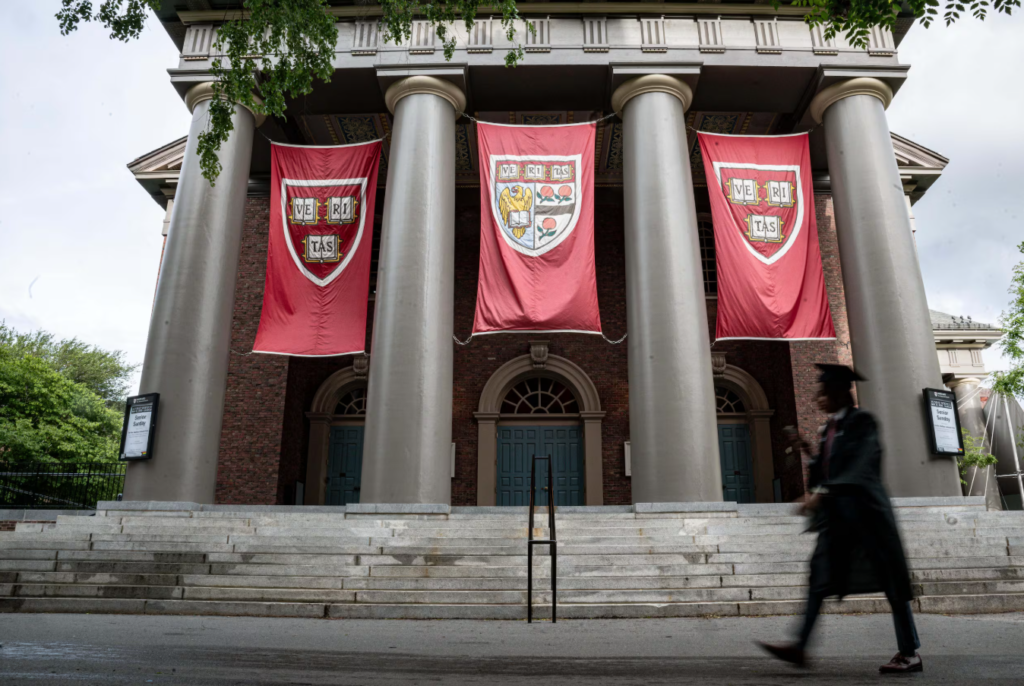
Tokyo University in Japan is considering temporarily accepting Harvard University students who are suspended due to the Donald Trump administration’s blocking of foreign student enrollment.
According to a report by the Asahi Shimbun on the 26th, the University of Tokyo said, “We will help talented young students continue their studies without stopping them.” The details include providing Harvard University students with opportunities to attend some classes and issuing certificates of completion to receive credits when returning to Harvard or entering other universities in the future. The University of Tokyo has a precedent of accepting 20 Ukrainian students who had to stop studying due to Russia’s invasion of Ukraine in 2022 and having them take classes.
Meanwhile, the Trump administration notified Harvard University of the cancellation of Harvard’s Student and Exchange Visitor Program (SEVP) certification on the 22nd. Harvard University filed an injunction on the 23rd, the next day, claiming that the measure violates the Constitution and seriously affects the lives of about 7,000 international students, along with a lawsuit, demanding the suspension of the cancellation of the certification. After accepting Harvard’s request for provisional injunction, Harvard researchers who hold student visas (F-1) or exchange visitor visas (J-1) will be able to maintain their status of stay for now.
The Japanese government said it is in talks with the U.S. government to minimize the impact on its students at Harvard after the Trump administration decided to revoke Harvard University’s certification of international students. According to Kyodo News on the 23rd, Hayashi Yoshimasa, a government spokesman from Harvard University, said in a press conference, “There are many Japanese students at Harvard University. We are closely monitoring the situation with high interest.” He added, “The Japanese government will take necessary responses, including dialogue with the United States.”
Harvard University has international students and scholars from more than 140 countries, of which 260 are known to be Japanese students. By nationality, China accounted for the highest number of enrolled students with 2126 students, followed by India with 788 and Canada with 769.
SALLY LEE
US ASIA JOURNAL

