


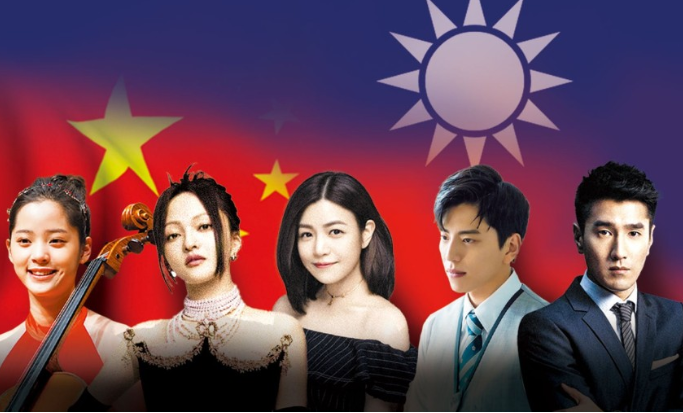
Actor-broadcast Euyangana, once called the “national sister” in Taiwan, was appointed as an ambassador for cultural tourism in Jian, Jiangxi Province, China on the 11th. “This is my father’s hometown, a Taiwanese city councilor,” he said at the appointment ceremony. “Every time I come here, I feel like I’ve come to my hometown.” Euyangana was a “cello prodigy” who started cello at the age of six and entered the U.S. Curtis Institute at the age of 13, and entered the entertainment industry with a drama called “Beijing Love Story” produced in mainland China. Taiwanese people’s eyes on him began to get cold only when they showed explicit pro-China moves. “I am Chinese,” he wrote on Facebook in 2019, and in March, he quoted Chinese Foreign Minister Wang Yi as saying on Chinese social media Weibo, “The only name referring to Taiwan region in the United Nations is ‘China’s Taiwan Province.” Taiwan promoted China’s position that it is part of Chinese territory. When the People’s Liberation Army launched a joint sword military drill, a training exercise to surround Taiwan Island, in October last year, he wrote on social media, “China is only one.”
Ouyangana is known to be one of more than 20 Taiwanese celebrities who are under investigation by Taiwanese authorities for cooperating with China’s armed unification policy. On the 15th, Taiwan’s continental committee, the organization in charge of China, said at the Legislative Council (National Assembly) that it recognized the pro-China actions of Taiwanese celebrities as a serious threat to national security and was investigating them. The crackdown began as there was a growing sense of crisis that China was mobilizing a large number of Taiwanese celebrities as part of a covert operation to ease Taiwanese opposition and alertness. Taiwan’s laws and regulations on exchanges with China stipulate that “Taiwanese should not support or cooperate with China’s propaganda of the united front targeting Taiwan.” Violations of this can result in fines of up to $500,000 in Taiwan.
Analysts say that the Taiwanese government’s move is due to the judgment that Taiwanese celebrities’ pro-China moves have reached a dangerous level. In particular, even though the Democratic Progressive Party, which has a strong anti-China tendency and seeks independence, has been in power for a long time since 2016, celebrities’ pro-China moves continue without hesitation.
Singer-actress Jang Shaohan participated in China’s National Day event in 2020 during the time of President Tsai Ing-wen, and also attended an event to commemorate the 100th anniversary of the founding of the Chinese Communist Party in 2021. Among the celebrities who quoted Wang Yi on Chinese social media in March, the phrase “Taiwan will definitely return to China” is Chen Yan-si, the heroine of the movie “The Girl We Loved Then,” top actor Zhao Yutting, and MC Hou Fei-chun, an announcer. This trend remained unchanged even after President Lei Ching-deh took power, which showed stronger anti-China tendencies than Tsai Ing-wen.
At the Beijing concert of May Day, a popular Taiwanese rock band, when he was inaugurated in May last year, main vocalist Asin said, “When we come to Beijing, we Chinese always eat grilled duck.” Taiwan’s most popular female singer Tsai Yilin, who had a concert in Nanchang, Jiangxi Province, China in the same month, shouted, “Our Chinese Nanchang is the most passionate, right?”
It is analyzed that the move by Taiwanese celebrities is also related to the issue of livelihood. China is too big a market to turn a blind eye to due to patriotism. For one, the cost of appearing in dramas in mainland China is up to six times higher than that of Taiwan. For example, Taiwanese actor Wu Chi-lung is paid about 500,000 yuan per episode in China, while his Taiwanese counterpart is paid only 80,000 yuan. China, which accounts for a quarter of the global movie market, produces more than 800 movies a year.
Many analysts say that the recent controversy over male celebrities’ avoidance of military service is a measure to continue their activities in China. Taiwanese men are obliged to serve in the military for one year. However, as tensions between the two sides (China and Taiwan) have increased recently, Taiwanese celebrities are reluctant to join the military and thus should give up their activities in China. This has led to a case of avoiding military service as entertainers.
A case in point is the case of actor Wang Da-ru, nicknamed “Taiwan’s First Love,” earlier this year. Taiwan’s Free Times also reported on the 15th that prosecutors arrested nine celebrities on charges of avoiding military service with false medical certificates. Both Wang Da-ru and the recently arrested celebrities reportedly tried to avoid joining the military for fear of disrupting Chinese activities.
The notation of “Taiwanseong” was also controversial as it was marked by several Taiwanese celebrities who were active in Korea.

Tzuyu, a member of the group TWICE, posted an apology video to Chinese netizens in January 2016, saying, “Only one China exists” after waving a Taiwanese flag during an appearance on MBC’s “My Little Television” in November 2015. Recently, there was a heated debate in China as his agency JYP Entertainment marked “Taiwan Province, China” in Tzuyu’s nationality option in the English version of the fandom platform “FANS.”
Lai Guanlin, who appeared on Mnet’s “Produce 101” Season 2 and was selected as the final member of the group Wanna One, also introduced himself as “from Taiwan, China” in October 2020 during a celebration of China’s National Day.
China’s National Day is a day to remind Taiwan of its history of losing the mainland to Taiwan and losing to the island. For this reason, Taiwanese celebrities have tended to avoid standing on the stage to celebrate China’s National Day.
Lai Guanlin has previously shared a post saying, “I support the Hong Kong police” in response to protests against the Hong Kong repatriation law.
However, there is also an atmosphere of carefully watching the aftermath, as this is not the first time that a pro-China celebrity has been moved to ” repel” in Taiwan.
Lai Guanlin’s actions were criticized in Taiwan at the time, and the Continental Committee criticized at the time, saying, “Taiwanese should not support or cooperate with Chinese-style unification front propaganda,” adding, “Taiwanese celebrities’ participation in National Day celebrations is an act of abandoning the love and support of Taiwanese society.” However, he has been active for many years, and after recently announcing his retirement from the entertainment industry, he attended an exchange event with Taiwan’s presidential office and was seen with famous politicians.
The Taiwanese government also once took a conciliatory attitude toward celebrities’ pro-China activities in consideration of the realistic situation. “It was very sad whenever Taiwanese cultural workers were pressured under the roof of others,” Lei Ching said last year. “We must give them understanding and consideration.” The ruling Democratic Progressive Party also made a conciliatory gesture, saying, “I believe that my friends made such remarks due to political pressure.” However, the attitude seems to have changed 180 degrees this year. Lei Ching-de sent a strong warning message in March, saying, “The relevant authorities should provide Taiwanese celebrities with precautions when working in China, and clarify the scope of investigation of related remarks or actions that harm the dignity of the country.”
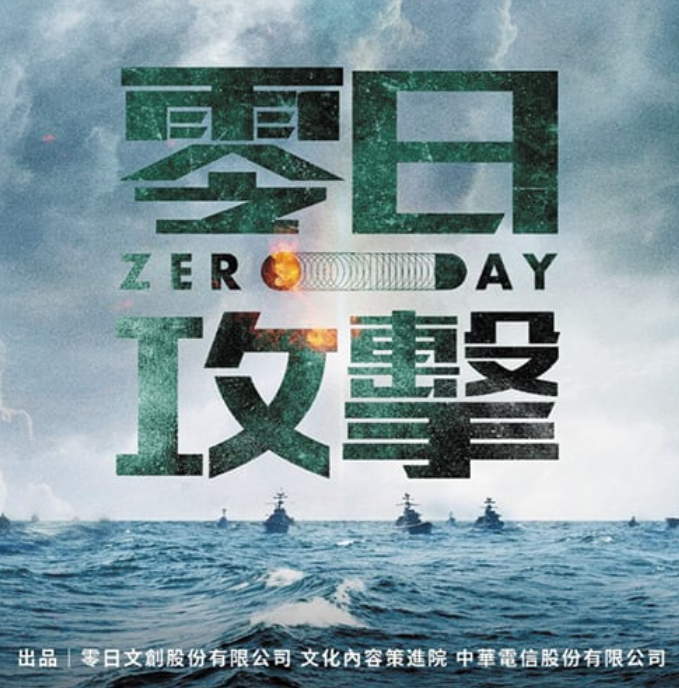
Taiwan is also seeking to take more aggressive measures. The production of “Zero Day,” a 10-part Taiwanese drama on a sensitive and unconventional theme of “China’s invasion of Taiwan,” has been funded by the government and is set to air. Former President Tsai Ing-wen also attended the “2025 Democracy Summit” held in Copenhagen, Denmark on the 13th. The drama is about China invading Taiwan in 2028, when the next presidential election will take place. The government provided Taiwanese dollars, nearly half of the production cost of Taiwanese dollars 259.21 million. The trailer released showed Taipei’s presidential office and Taiwanese warships.
SOPHIA KIM
US ASIA JOURNAL

