


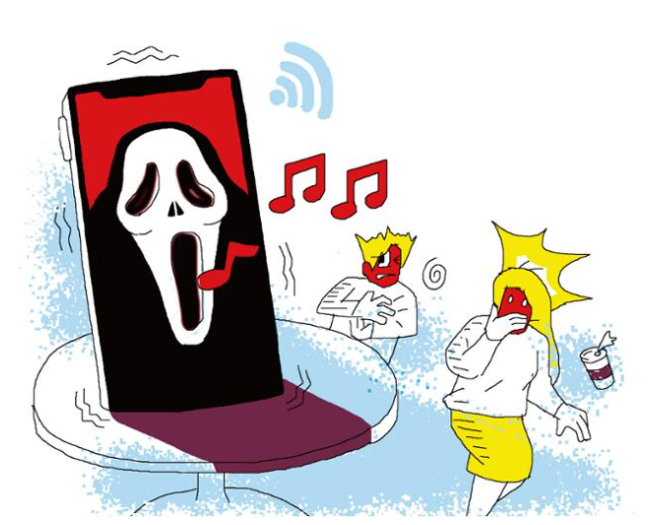
Japanese companies are struggling to find ways to lower the burden on MZ generation (born in the early 1980s and early 2000s) to respond to phone calls. Since they are a generation that is accustomed to communicating only through text messages on smartphones, some employees even quit their jobs under pressure that they might make a mistake on the phone.
According to the Asahi Shimbun on Wednesday, an increasing number of companies are requesting telephone service training for young employees to specialized companies. An increasing number of companies are also entrusting their services to “telephone agencies” that pick up and connect them instead of companies.

According to DuPain, a telephone response training company, related inquiries are continuing, such as “More and more employees are leaving the company because it is difficult to answer the company’s phone,” and “There are employees who cannot report or deliver information on the company’s internal phone.” Asahi said, “There are many people who have been trained in DuPain who have used landline phones for the first time,” adding, “Some companies spend a week only training new employees to respond to the phone.”
In fact, according to a survey of 562 people aged 20 or older nationwide by telephone agency service provider Softs in 2023, about 60% said they were “burdened by the call.” Among the respondents who said they felt burdened, 74.8% were in their 20s.
Young employees find it difficult because they are unfamiliar with fixed-line telephones. According to a 2023 survey by the Ministry of Internal Affairs and Communications, 57.9 percent of households use fixed-line telephones, down about 20 percentage points from a decade ago, while mobile phones are steadily increasing to 90.6 percent.
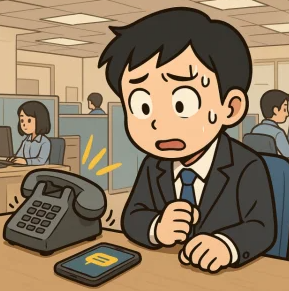
However, this is not the only reason why people feel pressure over phone calls. Some analysts say that it is because they frequently experience mounting criticism against writers who write wrong things on social networking services. “Young people feel a great sense of responsibility to endure when they say something wrong, as they often encounter controversies over social networking sites,” counselor Moe Ono told Asahi. “I am also worried that I cannot grasp the other person’s feelings such as facial expressions or gestures through phone calls.”
Some point out that the Japanese-style company culture of entrusting young employees to respond to phone calls should be changed. Shunta Wakimura, an executive at Uuru, a telephone service company, told Asahi, “We need to think about whether the practice of answering the phone is bullying by new employees,” and Moe Ono also stressed, “If the boss teaches us how to respond to the phone carefully, the anxiety of young employees will also be relieved.”
SALLY LEE
US ASIA JOURNAL

