


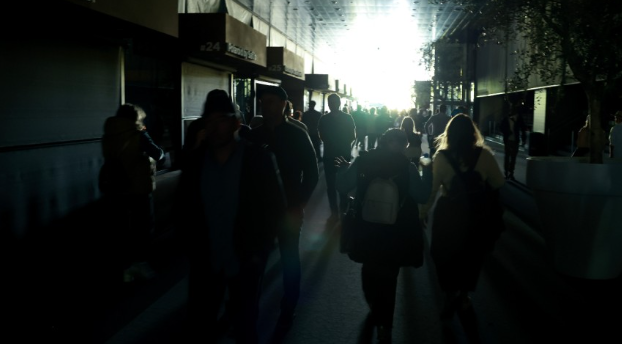
On Monday, the 28th, when citizens were busy with their daily lives, a sudden blackout in broad daylight quickly turned Spain into a lawless zone.
Hundreds of tourists and citizens were trapped in trains and subways that stopped with lights turned off, and the road where the traffic lights disappeared was simply a nuisance, Spanish media said.
As some phones and the Internet went down, people grabbed passers-by and borrowed mobile phones, and the front of the school was crowded with parents who came to pick up their children early.
Spain’s largest daily newspaper El Pais reported that major cities such as Madrid, the capital of 7 million people, and Barcelona, the second city, were in chaos, saying the country was paralyzed by the worst blackout in recent history.
Citizens in Madrid panicked when power was cut off during work and panicked when they found their phones in their hands stopped following traffic lights on the road, according to El Pais.
As the traffic lights on the road did not work, the road turned into a lawless zone where “the first person who speeds up wins,” the newspaper said.
Passing through the intersection was truly an adventure for both pedestrians and vehicles, and traffic in the city was paralyzed as vehicles stopped at every signal to avoid a collision.
Police officers controlled the vehicle with a receiver instead of a dead traffic light, but in some areas, citizens got out of the car and tried to control it when the police did not come forward.
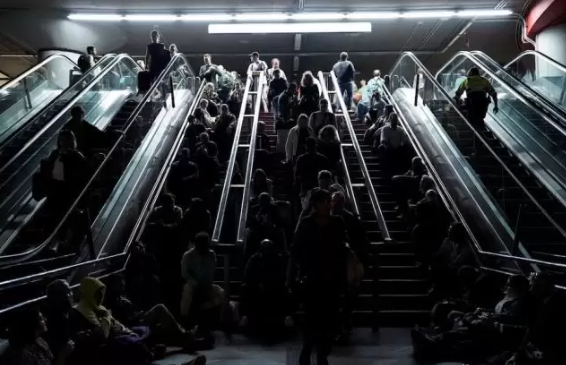
Other transportation methods, such as subways and trains, have also stopped, causing tourists and commuters to be trapped in their vehicles without knowing why.
The chaos was compounded as citizens who could not take the subway flocked to the road to catch taxis.
In the wake of the “taxi chaos,” passers-by, who were stranded, were often seen standing by the road with nervous faces while writing their destinations on paper.
“Is the end of the world already here?” said one Barcelona citizen, who was trying to turn on car radio broadcasts that were stuck on the road and not turned on, self-help.
During the day, the blackout, which occurred in most of Spain, Portugal and parts of southern France, disrupted power as well as communications networks such as the Internet and payment systems.
In addition to messaging apps, some mobile carriers have also been seen holding on to a passerby who is unfamiliar and asking him to “lend me a cell phone so I can contact my mother.”
As the clock-out time approached, the anxiety of citizens who have yet to go home grew even greater.
Some parents flocked to the front of the school to take their children home before school ends.
The main roads leading to downtown Madrid were hit by record traffic from 3 p.m., and most shopping malls and shops were closed with lights off from early midday.
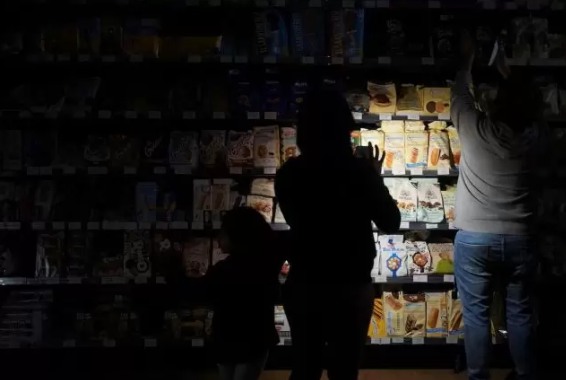
As the Spanish government declared a national emergency, supermarkets and gas stations were also lined up to buy fuel and emergency food.
However, most stores did not have credit card machines working, and even cashless citizens had to struggle with this.
In front of the bank branches, there was a long line to draw cash.
Juan Carlos Leon, who commutes and commutes from Barcelona to the neighboring city of Badalona every day, told El Pais: “I gave up going to work because I couldn’t get on the train and bought portable batteries, radios, candles and other survival kits from a nearby store.”
The blackout lasted into the evening, and it wasn’t until late at night that some power began to be restored.
Spain’s Prime Minister Pedro Sanchez said in a televised address that night that he had completed the restoration of about half of the electrical grid.
However, he did not say when the power would be fully restored and predicted that it would be difficult for many citizens to come to work on the 29th, the next day.
Neighboring Portugal, which suffered a major blackout together, also began to resume power supplies late at night in parts of the capital Lisbon and the second city of Porto, Spain’s EFE news agency said, and the suspended power grid was expected to be restored on the 29th.
Meanwhile, while the cause of the blackout has yet to be determined, some Spanish citizens also appeared anxious, saying, “Isn’t it Russia’s doing?”
Spanish authorities say they are investigating the cause of the outage and have not yet ruled out any factors.
SAM KIM
US ASIA JOURNAL

