


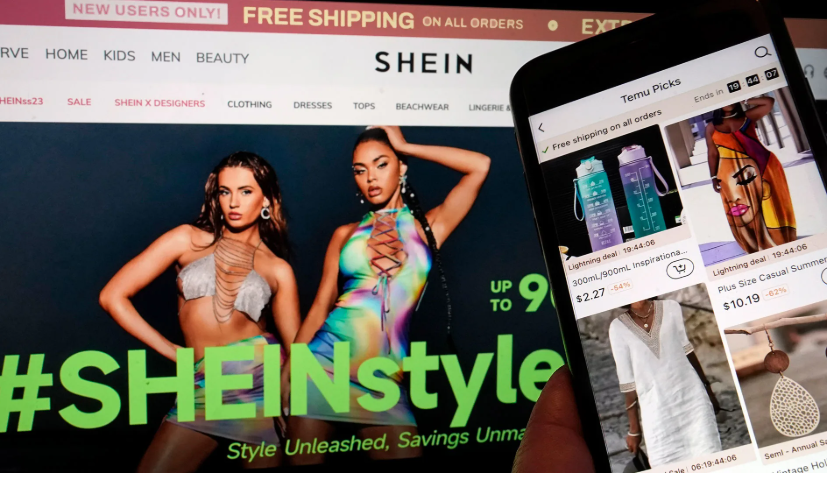
Chinese fast fashion company Shein has significantly increased the prices of products ranging from dresses to kitchenware in the U.S.
Shein’s move is seen as a sign of the impact of the trade war on U.S. consumers, with the Donald Trump administration signaling tariffs on small cargoes.
According to Bloomberg on the 27th, Xu Yin raised the prices of most products in the United States on the 25th.
There was a big difference in the amount of increase by item. The average price of the top 100 products in the beauty and health category rose 51% in a single day. The home and kitchen products and toys category rose more than 30% on average, and women’s clothing rose more than 8%. The price of kitchen towels soared 377% for 10 sets.
From April 24 to 26, 50 items were selected from various categories and analyzed, and prices in the U.S. increased by an average of 10%.
The price hike reflects the announced tariff burden as the U.S. government has decided to end the “demini” duty-free benefits that have been applied to small cargoes from mainland China and Hong Kong.
With the end of the benefits, Chinese e-commerce platforms such as Shein and Temu will pay high tariffs of 120% on multiple items.
U.S. customs authorities have exempted tariffs and customs fees for goods under $800, but the measure will charge a fee of $100 per mail starting on the 2nd of next month. Further increases are scheduled after June 1.
“President Trump has argued that there is virtually no inflation due to falling energy and food prices, but Xu Yin’s price adjustment shows that Chinese companies are starting to pass on the added import costs to U.S. consumers,” Bloomberg said.
Shein offered some Chinese partners incentives in February to induce the establishment of Vietnamese production facilities to avoid U.S. tariff policies. Temu is pushing for mass delivery from Chinese factories to U.S. warehouses by introducing a “semi-custom” system.
To reduce the high tariff burden, the semi-customs system refers to delivering goods directly from Chinese factories to US warehouses in large quantities and then back to consumers in the United States. Previously, packages were sent directly from China to US consumer homes.
SAM KIM
US ASIA JOURNAL

