


It has been diagnosed that the tariff war triggered by President Donald Trump could put a greater burden on U.S. female consumers.
On the 16th, CNN pointed out that “the cost that women have to pay can easily increase,” referring to President Trump’s 10% basic tariff on trading partners and 145% tariffs on China.
CNN pointed out that U.S. tariff policies are designed to favor men over women.
As of 2022, for example, tariffs imposed on women’s clothing averaged 16.7%, higher than the average tariff rate for men’s clothing (13.6%).
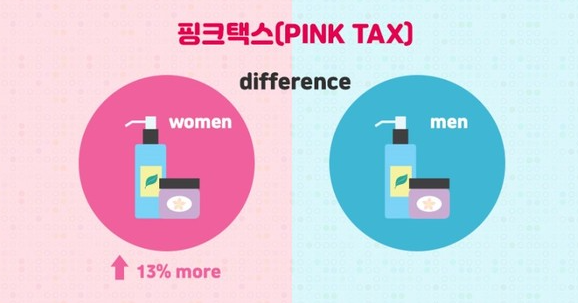
The cost of women’s goods is referred to as “pink tariff” due to this gap. The term is derived from “pink tax,” which refers to a time when consumers of the same type of women’s goods are more expensive than men’s.
According to a study by Edward Soh, director of trade and global markets at the Progressive Policy Institute (PPI), a progressive U.S. think tank, the tariff gap imposed on women’s and men’s clothing costs American women more than $2 billion (about 2.8 trillion won) per year.
In the case of President Trump’s new tariff policy, it may not just be very unfavorable to women.
Rory Taylor, a professor of public service and administration at A&M University in Texas, analyzed that President Trump’s tariffs could unintentionally close the gender gap in tariffs by raising the tariff cap on men’s clothing.
However, CNN observed that President Trump’s tariffs will ultimately have a greater impact on women because women spend more money on clothing on average.
Some analysts say President Trump’s tariff policy could put more pressure on low-income families.
In the case of low-income families, the proportion of clothing and daily necessities costs in income is higher than that of high-income families, so tariffs on these goods could be an immediate burden on households.
In addition, the fact that relatively higher tariffs are imposed on low-priced clothing than on high-end clothing is also analyzed as a factor that increases the burden on low-income families.
In the United States, different tariff rates are imposed on different fabrics, and the tariff rates on high-end fabrics such as wool, cashmere, and silk are lower than those of cotton, polyester, and nylon used in low-cost clothing and sneakers, explained Sheng Lu, a professor of fashion and clothing at the University of Delaware.
SAM KIM
US ASIA JOURNAL

