


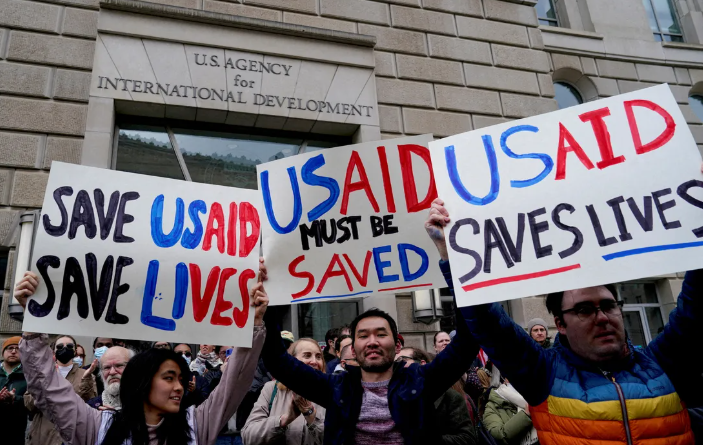
The negative impact of the U.S. freeze on foreign aid is rising around the world. Developing countries and middle-income countries that have been helped by civil safety, such as crime control, prevention, and health, are bearing the brunt of budget cuts and business interruptions. Support for organizations and organizations that have been leading the spread of American-style democracy has also been cut one after another, paralyzing their function. As the U.S., which has been a global leader in the liberal camp, voluntarily returned the title, countries that faced a sudden gap became busy preparing a response. Some argue that it is an opportunity to have the capacity to solve problems on its own, rather than relying on a money line that is shaken by changes in the political situation.
The Washington Post reported on Wednesday that anti-drug programs in Latin America were abruptly suspended after the U.S. froze its overseas aid. This is due to the cut in the budget of the International Drug and Law Enforcement Administration (INL) under the State Department, which supports recipient countries’ response to organized crime, human trafficking and drug trafficking.
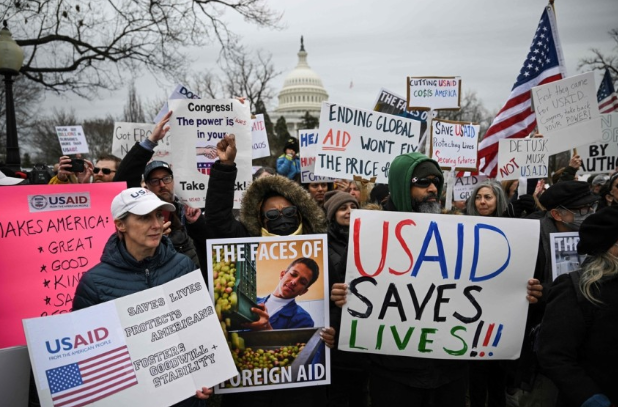
Colombia’s Defense Ministry told the WP that the International Criminal Investigation Training Assistance Program (ICITAP) has been suspended, and other support projects have been affected. Ecuador, which has planned to build a $7 million (about 10.1 billion won) pier to crack down on drugs, has put the project on hold. In Mexico, about half of the manpower employed in the INL project (about 60 people) has been laid off, and the drug fentanyl testing program at the port has been reduced.
Some countries that have learned how to crack down on crime and operate security systems are seeking alternatives to fill the gap. “It is a moment when we question whether Colombia has made the right geopolitical decision,” said Elizabeth Dickinson, a senior analyst at the International Crisis Group. “If the U.S. is not a reliable partner, Colombia will seek alternatives.” A former security official interviewed by the Washington Post said Colombia has relied on the U.S. and its allies for about 70 percent of its security-related resources, adding that Colombia is seeking new technology and security partnerships with India, Turkiye and Middle East countries due to the suspension of aid.
Non-governmental organizations (NGOs) and media, which have been monitoring human rights suppression in autocratic countries or spreading liberal systems, have also been directly hit by budget cuts. VOA, a federal media company with 83 years of history, is on the verge of being closed, with 1,300 employees, including reporters and PDs, on indefinite leave. U.S. President Donald Trump, who has expressed dissatisfaction with VOA’s criticism of Republicans and favoring Democrats, signed an executive order to cut spending on the 14th.
The National Foundation for Democracy (NED), which has provided financial resources to human rights organizations in North Korea, has also cut its budget. As the NED stopped providing financial support to human rights organizations in North Korea, NGOs that have continued human rights activities in North Korea are facing dismissal, suspension of business and closure. “The suspension of VOA support will only help dictators,” said Washington Post columnist Max Boot. “The vacuum created by Trump will be filled by Russian President Vladimir Putin and Chinese President Xi Jinping.”
Africa, where the “PEPFAR for AIDS Relief” has been suspended due to the suspension of overseas aid, is directly threatened with health and safety. After President Trump’s decision, reports continued that institutional workers were fired and hospitals were closed. The impact has also led to the observation that more than 500,000 people will die in South Africa over the next 10 years. As the U.S., which was responsible for 40% of the UNHCR’s contribution, has stopped, Africa’s severe refugee problem is also expected to worsen in the future.
Some argue that the U.S. is a wolf in sheep’s clothing in that foreign aid disguised as humanitarian aid causes incompetence of governments in beneficiary countries, former African Union Ambassador to the U.S. Chihombori Quao said in an interview with Al Jazeera.
SALLY LEE
US ASIA JOURNAL

