



Korean companies are on alert as they herald a “tariff bomb” on all of South Korea’s largest export items, automobiles and semiconductors, which live off trade. Amid the first high-level negotiations between the U.S. and Russia to end the war in Ukraine, President Trump also predicted the possibility of a U.S.-Russia summit later this month.
When asked by reporters about the level of auto tariffs at a press conference held at his home in Mar-a-Lago resort, Florida, President Trump replied, “I’ll probably talk about it on April 2nd, but it’ll be 25% off.” April 2 is a day after Trump’s second-term administration officials submit a report containing various tariff options for imports into the United States.
When asked about drug and semiconductor tariffs, Trump said it would be “more than 25%,” adding that it would be “very, very significantly higher in a year.”

The U.S. currently imposes 2.5% tariffs on passenger cars. President Trump’s remarks mean that he will raise the tariff rate for passenger cars to 25% in the future, the same level as trucks. In the case of the European Union (EU), 10% of tariffs are applied to U.S. passenger cars, and considering about 20% of VAT, President Trump has argued that the tariff rate actually reaches 30%. As President Trump reaffirmed his willingness to impose tariffs on each item, such as automobiles and semiconductors, Korean companies that live off of exports are expected to be hit directly. Last year, semiconductors accounted for the largest share of Korea’s total exports at 20.8%, followed by automobiles at 10.4%. On top of that, South Korea is in the middle of the range of the second Trump tariff bomb, as President Trump officially announced on the 12th that he will impose 25% tariffs on all steel and aluminum products entering the U.S. and decided to impose mutual tariffs in April.
However, President Trump said he wanted to give foreign companies time to avoid tariffs by setting up factories in the United States, leaving open the possibility of negotiations with governments and companies in major countries.
Before the announcement of the new tariffs, he said, “I want to give companies time to enter the U.S. If they enter the U.S. and set up factories, there are no tariffs. We want to give them a little chance.” It is interpreted as meaning that it will allow time for companies to move their production bases to the U.S. by giving them a certain amount of time before tariffs take effect or raising tariffs step by step.
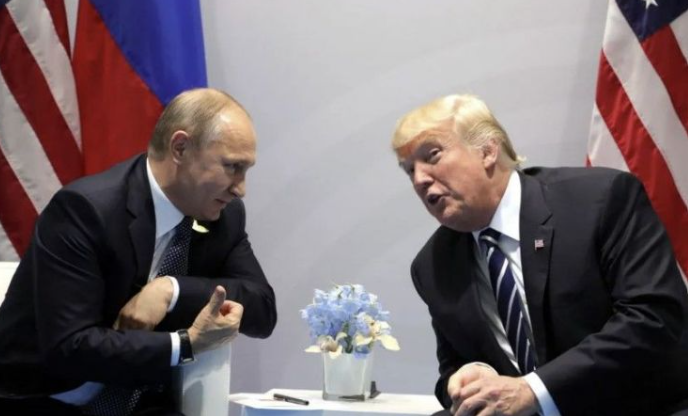
President Trump also said semiconductor and automobile companies will announce investments in the U.S. in the coming weeks. He did not mention specific company names. Amid the rapid pace of negotiations between the U.S. and Russia to end the war in Ukraine, President Trump also mentioned the possibility of holding a summit with Russian President Vladimir Putin this month. The U.S. and Russia held ministerial talks in Riyadh, the capital of Saudi Arabia, attended by U.S. Secretary of State Marco Rubio and Foreign Minister Sergey Lavrov. The two sides decided to set up a high-level negotiation team, expand cooperation to rebuild Ukraine after the war, and discussed lifting sanctions against Russia.
“The meeting was very good,” Trump said, adding that he could meet with Putin before the end of this month. He also said that the meeting gave him “more confidence” in the possibility of signing a peace treaty between Russia and Ukraine. He also stressed the need for an end to the war, saying that “a large number of North Korean troops were killed” as well as Russian and Ukrainian soldiers on the battlefield. As for President Zelensky who complained about passing Ukraine, he criticized the Ukrainian leader, saying that his approval rating dropped to 4 percent.
“They sat at the negotiating table for three years,” Trump said. “I’m worried that they can’t sit (at the negotiating table), but they could have negotiated a long time ago.” “The people of Ukraine should hold an election. Ukraine is collapsing,” he said, driving President Zelensky for not holding the general election in October 2023 and the presidential election in March last year on the grounds of martial law. President Trump also pointed to President Zelensky and criticized him, saying, “You should never have started, you could have made a deal,” adding, “It’s a matter of leadership that allowed the war to continue.” He blamed the Ukraine war, which began with Russia’s invasion in February 2022, on President Zelensky’s lack of leadership. In this regard, U.S. media Axios said that according to a recent poll, President Zelensky’s approval rating is 50 percent, not 4 percent.
In addition, regarding the presence of peacekeepers in Ukraine after the end of the war, President Trump said, “If (Europe) wants to do so, I’m all for it,” adding, “We will not do so because we are far away.” It is believed that he expressed a negative stance on the presence of U.S. troops in Ukraine, one of the terms of the end-of-war negotiations demanded by Ukraine.
SAM KIM
US ASIA JOURNAL

