


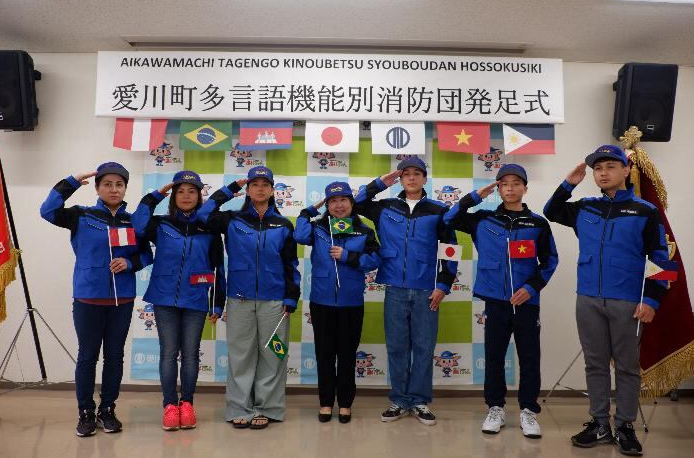
Last month, a special fire brigade was launched in Aikawa-cho, a rural town in Kanagawa Prefecture in the Middle East of Japan. A total of seven people gathered. Wearing blue jackets and hats, representing the Aikawa Fire Department, took turns holding a microphone and expressing their strong aspiration as new firefighters. However, the composition of the nationalities is a bit unique. There are no Japanese, but Vietnamese, Brazilian, and Peruvian members are filling the seats.
In the aftermath of the low birth rate and aging population, the number of firefighters protecting Japan from disasters such as earthquakes, floods, and fires is decreasing. Japanese firefighters are largely divided into full-time firefighters and part-time firefighters. Since it is impossible to respond to a large-scale disaster with only regular full-time personnel, the organization to supplement their role is the fire brigade. It is an organization based on the Fire Service Organization Act and its members receive 36,500 yen in annual salary and 8,000 yen in daily dispatch fees. It is said that it belongs to housewives and office workers with their main jobs because they are free to work concurrently. According to the Japanese Ministry of Internal Affairs and Communications, the number of firefighters as of last year was 746,681, down 20% from 30 years ago. Although the decline is not very steep due to the lack of retirement age, the aging of firefighters is said to be a problem. Among them, NHK and AeraDot reported that “foreign firefighters” have recently been launched in various parts of Japan, providing a reliable manpower to fill the lack of firepower. Japanese firefighters are not eligible for any nationality, but they are using them to form an organization consisting of only foreigners to entrust their own “special duties.”
There are two main roles for foreign firefighters. They teach them how to use Japanese fire extinguishers and other disaster prevention facilities that are difficult for foreigners to handle at universities where there are many foreign students. Furthermore, they play the role of interpreter who breaks the “language barrier” between Japanese firefighters and foreign residents at evacuation centers in the event of a massive disaster. Makoto Iwamoto, chief of the Aikawa-cho Fire Brigade, which established the “multilingual firefighters” last month, said, “We designed the (foreign firefighters) with the aim of establishing a relationship where Japanese and foreigners help each other. It is meaningful in that we launched it with the single mind that we will not let anyone (from the danger of the disaster).”
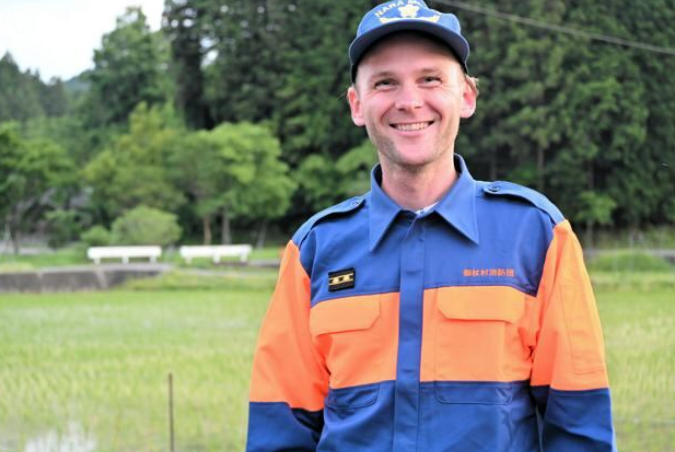
As Iwamoto explained, the foreign firefighters’ real purpose is to ensure that anyone living in Japan is not exempt from disaster prevention and relief. As of June last year, the number of foreigners living in Japan was about 3.59 million, nearly doubling in 20 years. The foreign firefighters are tasked with providing customized assistance to foreign residents while replenishing the dwindling number of Japanese firefighters.
In fact, foreign residents often hesitate to call 119 even in urgent situations because they cannot handle fire extinguishers written in Japanese or because ambulance calls are paid in their own countries. “Even I didn’t know how to call 119 in Japan for a long time,” said Hyogo, who moved to Yokohama, Kanagawa, Japan from Dalian, China in 2005 and joined a foreign firefighting team in 2020. Zhao Chun, a Chinese taxi driver who belongs to the Yokohama Fire Brigade, told the Nihon Keizai Shimbun, “I applied because I wanted to contribute to the region. Currently, I am participating in activities once a month while doing my main job. I am happy that it naturally melts into the region and at the same time, my own awareness of disaster prevention has increased.” The Japanese foreign firefighters started in Kusatsu City, Kansai City. This is an area where about 3,500 foreigners live, centering on international students attending the prestigious private Ritsumeikan University’s Shiga Prefecture campus. Mariko Nakanishi, vice president of the regional international exchange association, which taught Japanese language and culture to international students, first came up with the idea in 2014 and launched it the following year.
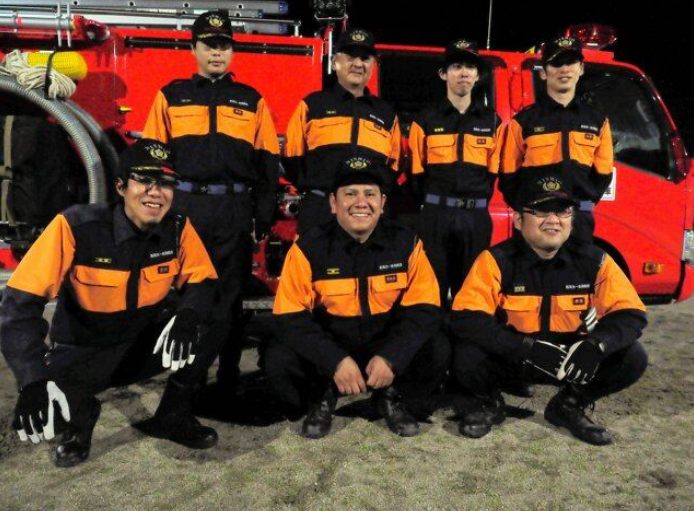
In the event of large-scale disasters such as earthquakes and typhoons, the Kusatsu City Foreign Fire Team is mainly in charge of supporting the operation of shelters, such as installing temporary toilets and assembling cots. In addition, it is said to be in charge of supporting residents from other cultures, including Muslims, who are somewhat different from Japanese culture. Vice Chairman Nakanishi told Aera Dot on the 13th, “Foreign firefighters understand the feelings of foreign residents more than anyone else because they have faced various difficulties (living in Japan). It serves as a “bridge” between Japanese and foreigners who avoid unnecessary misunderstandings and confrontations during the evacuation process.”
Following their “heritage” last month, a foreign firefighting team was launched in Aikawa-cho, and the first foreign firefighter appeared in Iwakuni, Yamaguchi Prefecture, in August last year. Aera-dat said a foreign firefighting team named “International Division” will be born in Izumisano, southern Osaka, this spring. On the 10th of last month, a briefing session was held in Tochigi, Tochigi, Tochigi Prefecture. Seventeen foreign residents of various ages from Nepal, the Philippines, Peru, and Sri Lanka attended, and after that, 18 people, including their families, applied for joining. Hiroshi Oki, president of the regional international exchange association, who hosted the briefing session, told the Tokyo Shimbun, “I want to join hands with an increasing number of foreign residents and support the community. We expect it to be a good opportunity for them to blend in with the region.”
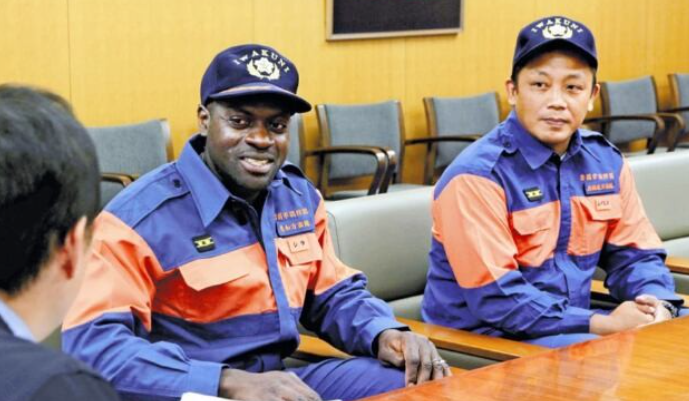
As local cities faced with such a shortage of firefighters began to recruit foreign firefighters, the number of foreign firefighters nationwide stood at 582 as of April last year, up 2.2 times from 2020, when the tally began. In some cases, the memory of the great disaster he experienced in Japan in the past motivated him to join the team. Yamashita Juria Mayumi, head of the foreign fire brigade in Aikawa-cho, told TBS, “I stayed in Japan during the March 11 Great East Japan Earthquake (2011), and as a foreigner, I experienced great anxiety. I want to create an area where foreign residents can live together with Japanese people in the disaster.” Foreign firefighters undergo regular firefighting training once a month, just like Japanese members. However, some point out that the scope of their activities is unclear. In Japan, only people with Japanese nationality can exercise public power.
EJ SONG
US ASIA JOURNAL

