


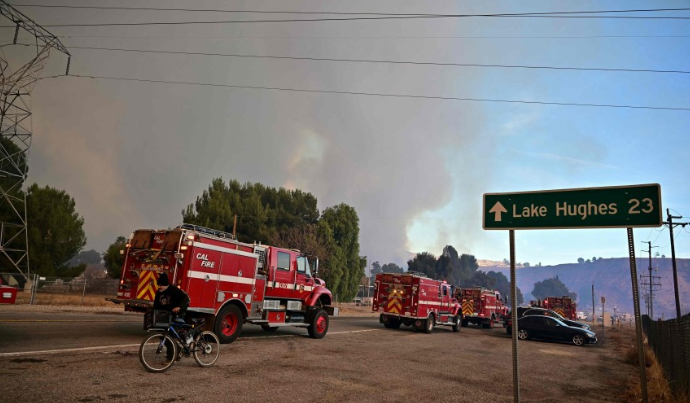
Due to the deepening monopoly of the U.S. fire truck manufacturing market, fire truck prices are soaring across the U.S. and delivery is being delayed. On the frontline, there are complaints that the fire truck is not adequately responding to the fire due to the lack of available fire trucks. According to the New York Times on Wednesday, most of the U.S. fire truck manufacturing industry is controlled by three companies. They include Rev Group with brands including Spartan, Ferrara and E-ONE, Oshkosi, a specialized vehicle company, and Rosenbauer based in Austria. These three companies control 70 to 80 percent of the U.S. fire truck manufacturing market.
The Rev Group, in particular, accounts for about 30% of the fire truck market in the United States. Small manufacturers in each region manufactured fire trucks in the 1990s. However, since the early 2000s, it has been closed or consolidated by Wall Street investment companies due to a series of financial difficulties. The Rev Group also grew by acquiring manufacturers of fire engines, ambulances, school buses, and road cleaning vehicles.
The problem is that Rev Group, which leans on the public sector, focused solely on profit-making. Timothy Sullivan, CEO at the time of Rev Group’s listing in 2017, said, “The companies we acquired had an operating margin of 4% to 5%, but we will increase it by more than 10%.” After the listing, Rev Group took over Spartan and Ferrara, focusing more on improving the efficiency of each company.
Unlike the automobile industry, the fire engine industry is difficult to increase efficiency through production automation. This is because fire departments typically replace vehicles every 10 to 15 years, and mass production is impossible because each vehicle is customized. However, without taking these industrial characteristics into account, the Rev Group closed its factories in Pennsylvania and Virginia in 2021 due to labor shortages after the COVID-19 pandemic, reducing the size of its production facilities to about a third.
Eventually, delays in delivering fire trucks intensified. Before the pandemic, Lev Group’s order backlog was about $1 billion, and the time it took to deliver after ordering was from one year to 18 months. However, the current order backlog is worth $4 billion, and it has to wait two to three years for delivery. The order backlog has quadrupled and the delivery period has doubled. Oshkoshi’s order backlog has also quadrupled compared to before the COVID-19 pandemic. The monopoly companies’ “betrayal business” has had a big impact on fire departments. The Los Angeles Fire Department in California, which aimed at 90% of the fire engine utilization rate, has been able to operate only 78% of fire trucks on average in recent years. “After a strong fire broke out in Pacific Palais last month, the Los Angeles Fire Department ordered the emergency dispatch of available personnel,” the New York Times said. “However, dozens of fire trucks were unavailable at the time.”
When the fire broke out in LA on the 7th of last month, firefighter Chuong-ho, who was asked to be dispatched to the scene, testified that “there were no vehicles to pick up many firefighters who could have been deployed to the scene.” Los Angeles Fire Chief Christine Crowley said about 100 firefighting vehicles were out of service in January, which caused significant problems in responding to the Pacific Palisades fire. At that time, 40 fire engines, 10 ladder trucks, and 40 other vehicles, including ambulances, were unavailable.
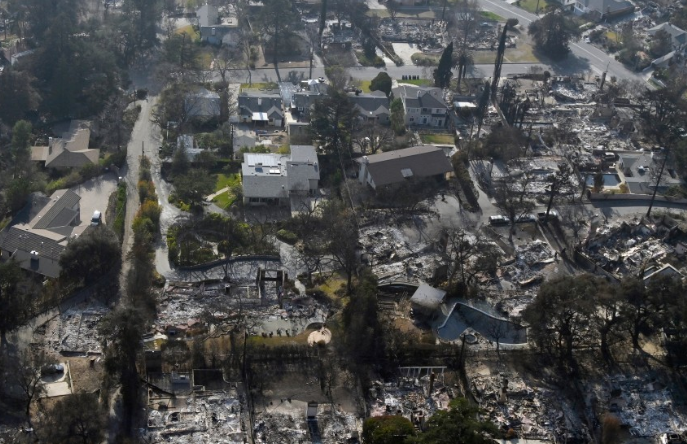
“Many vehicles have exceeded their expected life expectancy, and there is a high possibility of shutdown due to increased maintenance costs and lack of parts,” the LA fire department said in a budget submitted before the wildfire. Ho said it is difficult to obtain parts for old vehicles, so he has to search the Internet for replacement parts. Gil Carpenter, the fire chief in Benton, Arkansas, also complained, “Before, we could get parts in a day, but now it takes 10 months.”
Edward Kelly, president of the International Firefighters Association (IAFF), said, “Monopoly in a non-competitive market leads to exploitation,” adding, “I wonder how much more money (fire truck companies) need to make to be satisfied, and when will they put public safety above profits?”
Recently, fire truck companies are also trying to delay delivery. Unlike ordinary cars, fire trucks rarely have a standardized model. This is because fire departments in each city ordered customized fire trucks in consideration of characteristics such as region, topography, and population density. Rev Group expects to develop a standardized fire truck model and shorten the production period to less than a year. However, Mike Birnig, an executive of Rev Group, said, “It will take several years to solve the current order congestion problem.”
JENNIFER KIM
US ASIA JOURNAL

