


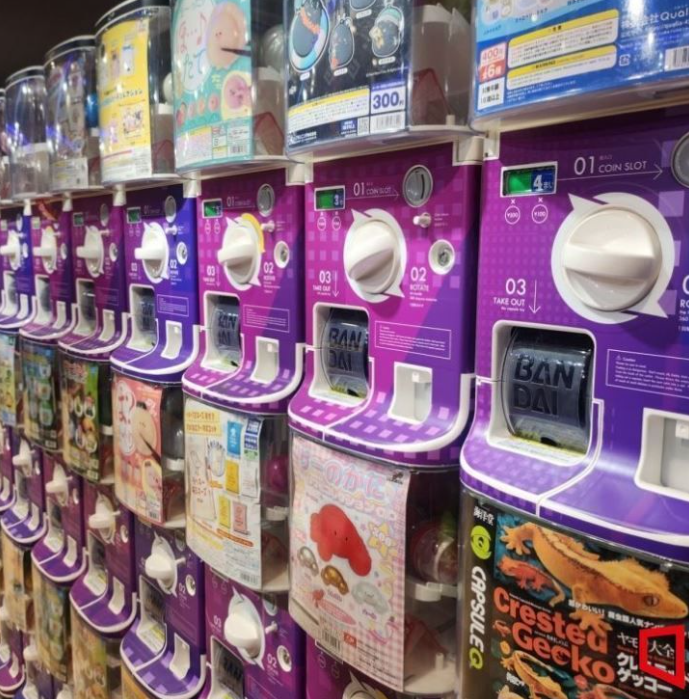
Capsule machines occupying a place in pop-up stores in downtown areas such as Hongdae and Itaewon contain goods (products) that are collaborated with famous characters or brands. How was the capsule machine craze that swept Japan become a trend in Korea.
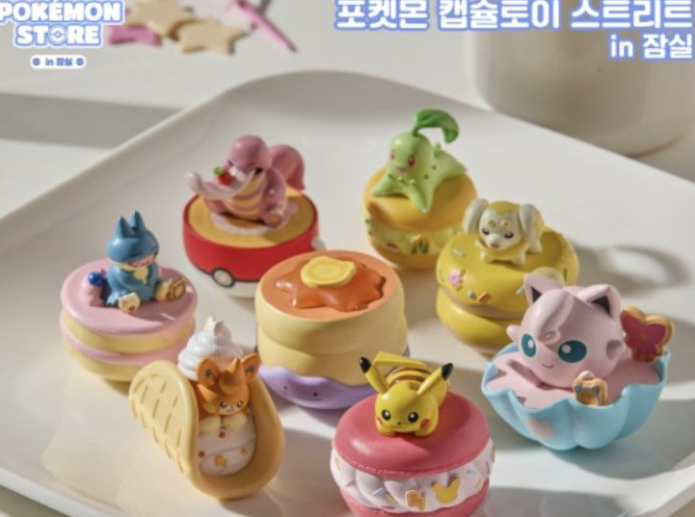
A capsule toy is a toy that comes in a plastic ball the size of a palm of your hand and is sold mostly in the form of random drawing. In the past, “capsule drawing” was popular in Korea, where coins worth around 500 won (approx. However, the capsule machine that has captured Gen Z’s attention these days is a much more advanced version. It is installed in a pop-up store organized by a large company, and the quality of the toy has been improved. There are also many popular characters that have been developed in cooperation with famous brands. Capsule machines were also popular at the Pokémon pop-up store in Jamsil, Seoul, which was held from late last year to early this year. Various types of props such as badges, plastic toys, and objects made in cooperation with the world-famous Pokémon brand were sold in the capsule machine. The price of the machine is between 3,000 won and 7,000 won (approx. It is a lot of money to spend on small toys, but there are also reports that he spent tens of thousands of won (approx. There are posts on used trading platforms that he will exchange his collected toys for other items.
The boom in capsule machines started in Japan. In fact, Japan has long been a powerhouse of capsule machines. Since importing capsule machines from the U.S. in the 1960s, machines have been actively installed in local marts and unmanned stores. The Japan Armour Association put the Japanese capsule machine market at 61 billion yen, the largest ever in 2022. The total number of machines installed is around 70,000, which is larger than stores (57,000 units) in convenience stores.
Capsule machines were considered items from memories in Japan, but they successfully targeted female consumers in their 20s and 30s in the 2010s and entered a new golden age. These days, Japanese capsule machines are called “gacha gacha” in Korean. It can be translated as “crack crackle crackle crackle crackle” in Korean. In Japan, gacha is a newly coined term that encompasses all products with random elements. There are also large supermarkets in downtown Osaka that only contain capsule machines called “forest of gacha gacha.” How did gacha come to attract attention from the younger generation in Korea and Japan.
Japanese marketing expert Katsuhiko Ono published “The Economics of Gacha Gacha” in August last year, which closely analyzed the “Gacha Boom” in Japan. In this book, he diagnosed that the biggest difference between the old capsule machine and today’s Gacha machine is price and quality. Unlike in the past, toys selected from Gacha machines today are high-quality props made by toy companies with a long history, and thanks to this, it stimulates the desire of adults to collect.
If the props were sold separately, they would not have received the same response as now. However, the unique business model in which an agency cooperates with a toy manufacturer to store products in a gacha machine and sell them at 3,000 won to 7,000 won per operation has resulted in an economy of scale.
In particular, the author emphasizes that the act of turning the gacha and expecting what will come out is “experience consumption,” and that “the key to popularity is that once it is out of production, it cannot be purchased in the future.”
“Experience consumption is the strength of offline marketing in contrast to online,” said Lee Eun-hee, a consumer studies professor at Inha University. “The process of turning the machine and expecting whether or not the goods you want will come out has become a consumer product itself.” However, he warned, “Drawing products may give a negative experience in that they include some gambling elements called randomness,” adding, “If consumers make machines pay too much money or experience only unpopular products being selected, discomfort against spending may increase.”
SALLY LEE
US ASIA JOURNAL

