


It has become a culture for young people who have a hard time getting a job in China to leave their jobs and hold a ‘retirement party’, CNN reported on the 5th (local time).
In May, ‘Ryang’ (pseudonym), who was working for a bank in Zhejiang, China, held his own retirement party, according to the report. Liang and his relatives celebrated their retirement by playing traditional instruments with a banner that said they had “done thing to do.” A lot of food was put on the table, and the lanterns used at the wedding stood around. Liang told CNN that he was “suffocated while doing mechanized and repetitive things,” explaining the reason for his retirement.
On social media (SNS) in China, there are hundreds of posts from users who have held retirement parties, such as Liang.
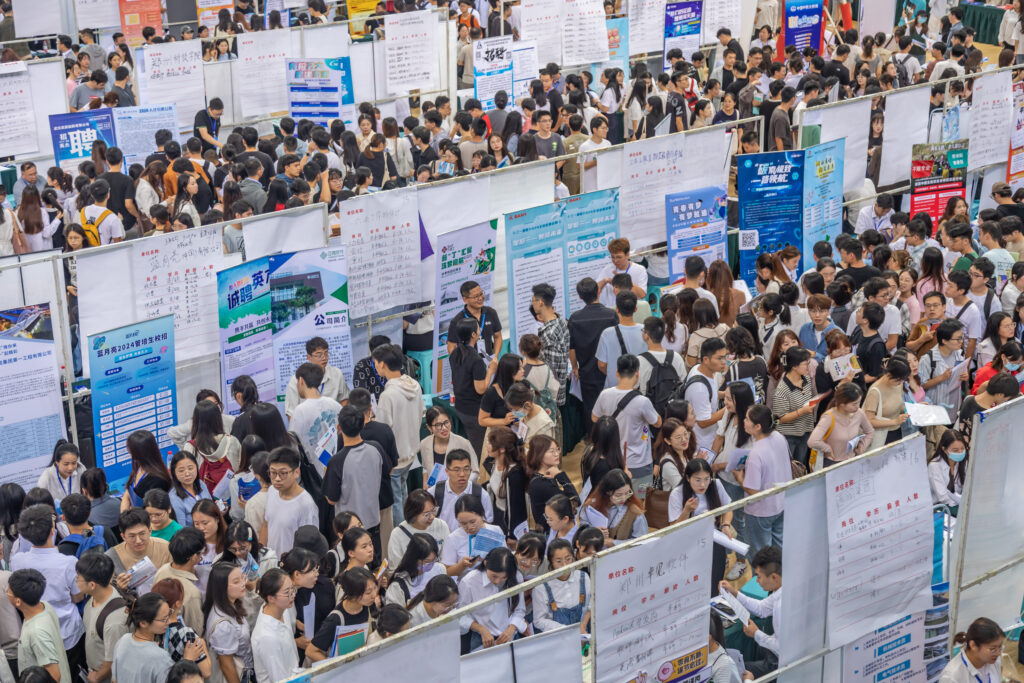
“It may seem strange to celebrate leaving the job amid China’s bleak economic outlook and high youth unemployment, but it’s a sentiment that many people share. “Young people who compete with their studies and have a hard time finding jobs are disillusioned with their work life by facing overwork and low wages.”
In the case of China, 10 million people take the Chinese version of the university entrance exam ‘gaokao’ every year. ‘Specs of prestigious university’ are important for employment, so we go through a hard preparation process for Gaokao. However, even if you graduate from college and get a job, waiting is stagnant wages and overwork. As of 2021, the average wage for college graduates in China is 5833 yuan (about 1.1 million won).
Nancy Chien, a professor of economics at Northwestern University in the United States, said, “The younger generation who lived in the myth that they could succeed economically at the expense of their childhood has met with wage stagnation and extreme overwork instead.” Yao Lu, a professor of sociology at Columbia University in the United States, said, “A large number of workers work in jobs that do not require that level of ability compared to their studies. These inconsistencies are creating job dissatisfaction among young people.”
SOPHIA KIM
US ASIA JOURNAL

