


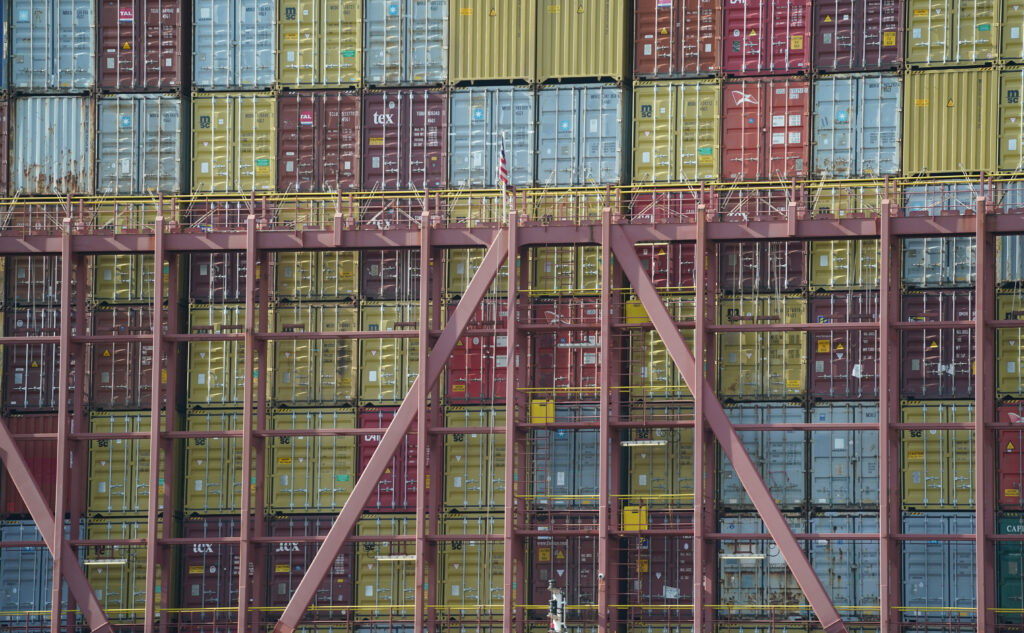
In addition to sending U.S. military goods transportation information to China, in the event of a collision between the U.S. and China, information collection devices such as sensors mounted on Chinese cranes can cause damage to the U.S. Amid the possibility of intercepting U.S. military nuclear bases on China’s largest telecommunications equipment company Huawei’s transmission tower and China’s video-sharing platform TikTok is being expelled from government agencies and universities for threatening U.S. security, concerns over Chinese cranes are growing in the U.S. Congress. However, some analysts say that the high dependence on China in various parts of the U.S. industry is showing a reality that it is not easy to remove Chinese products.Chinese cranes, which control 80% of the U.S. ports, and U.S. national security officials have begun to come up with countermeasures after pointing out that U.S. military material transportation information can be collected and transmitted through Chinese cranes installed in the ports. It is said that such information is being sent to the Chinese headquarters by attaching a sensor that can track the source and destination of cargo to the crane that loads containers from large ships to the port. In fact, the U.S. Defense Intelligence Agency confirmed in 2021 that the Chinese government can collect information on U.S. military equipment transported through ports through cranes, according to the WSJ.
Currently, 80% of cranes installed in U.S. ports are reportedly produced by Shanghai Telephone Heavy Industries (ZPMC) in China. ZPMC is a subsidiary of China Transportation Construction (CCCC), a state-run company that plays a key role in the “One Belt, One Road” project, which is the focus of Chinese President Xi Jinping.In particular, ZPMC products were installed at ports in Virginia, South Carolina and Maryland, where U.S. military bases are located, WSJ reported. Bill Evanina, former director of the National Center for Defense Security (NCSC), told WSJ, “Crane could become a new Huawei.” In addition to collecting confidential information, it can interfere with cargo transportation through remote access,” he pointed out.
The U.S. Congress has already begun to block Chinese cranes by requiring the Ministry of Transportation to submit a report on cyber security and national security threats for foreign cranes by the end of this year. Representative Carlos Jimenez of the Republican Party proposed a bill banning the purchase of Chinese cranes last year.
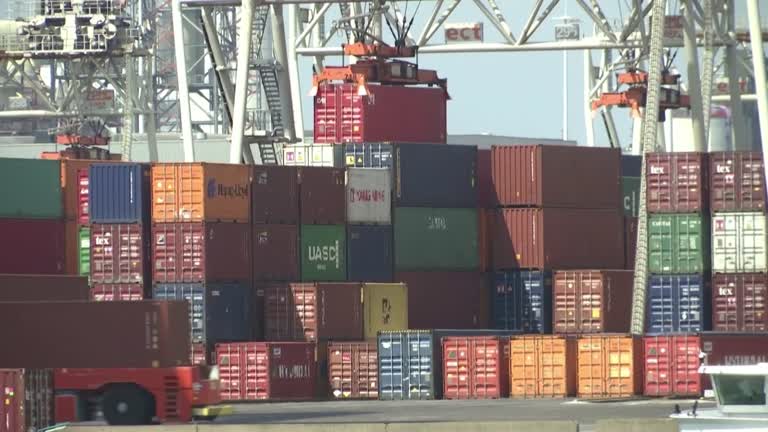
Decoupling paradoxes in China’s series of regulations on ‘dual use’ items
Concerns over Chinese cranes were raised as the U.S. began to search for Chinese products used in national security-related facilities to block Chinese espionage. However, it is pointed out that the more the U.S. responds to China’s threats through various export regulations and administrative orders, the more the U.S.-China “decoupling dilemma” is revealed.
While the U.S. introduces regulations on key technologies such as high-tech semiconductors and quantum computers, the decoupling front with China is widening as the risk of China’s “dual use” products penetrating deep into the U.S. industry with low prices is raised. Double-use items are products that can be used for commercial and military purposes, and expanding the blocking of these items could increase the burden on U.S. companies and industries.The U.S. Department of Commerce has been criticized by Congress for approving $23 billion in exports to sanctioned companies such as Huawei in the first quarter of last year. Reuters reported on the 4th that the Joe Biden administration analyzed that if Huawei’s sanctions are expanded, it will inevitably hurt U.S. companies such as Nvidia. “The U.S.-China trade and investment have increased for the second consecutive year despite geopolitical competition and blocking technology transfer,” he said. “It shows a huge paradox that China may be the largest and still an essential supply chain partner of the U.S.”
TED PARK
ASIA JOURNAL

