


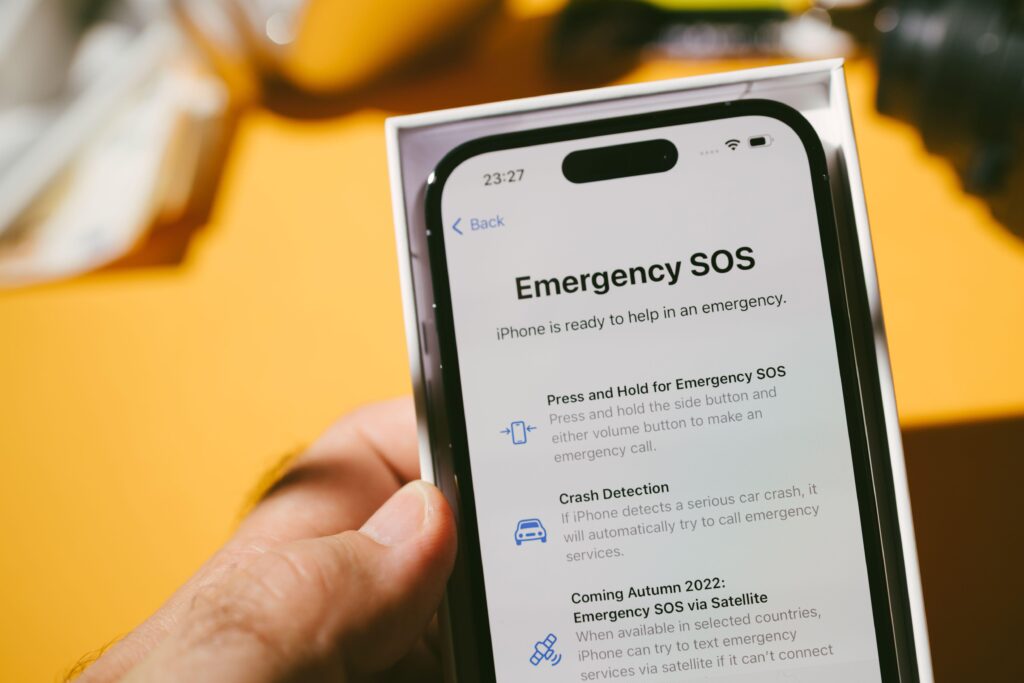
Recently, a drunk driver was arrested in New Zealand due to the iPhone’s collision detection function. According to local media such as the Otago Daily Times on the 9th (local time), a drunk driver recently crashed into a tree and was arrested for the iPhone’s collision detection function.The 46-year-old hit a street tree while driving a car in Anderson Bay. At that time, the iPhone, which detected the collision, automatically called New Zealand’s emergency call 111. The driver told 111 he was “fine,” but police, who suspected a drunk voice, sent police officers to the scene to arrest the driver.At the time, the driver pushed and refused the police, who demanded a breathalyzer test, and the police charged him with disobeying the blood alcohol level measurement and resisting the police.
Earlier last month, a similar incident occurred in South Korea. A in his 30s was found to have driven under the influence of alcohol for about 40km from Seoul to Incheon on the 18th of last month when the accident occurred, the collision detection function of A’s iPhone was activated. The police dispatched to the scene and arrested A on charges of drunk driving. A’s blood alcohol concentration was more than 0.08% of the level of license cancellation.The collision detection SOS service function, which is installed from the iPhone 14 series and the Apple Watch series 8, automatically requests rescue to 119 or 112 when a large collision is detected by a user. Through machine learning, this function comprehensively analyzes sudden changes in the direction of the car, changes in air pressure and speed in the car, and noise caused by collisions to detect whether the car crashes.
When the iPhone detects a high-intensity collision, a warning is displayed on the screen for 10 seconds and then a countdown is made for 10 seconds with an alarm sound. After that, if there is no response, call the reporting center and send a message along with GPS information, saying, “The iPhone owner is not responding to the cell phone due to a car crash.”In fact, the iPhone 14 crash detection function reportedly saved the lives of five truck passengers who crashed into a tree in Australia. In Nebraska, the U.S., even though there were no witnesses immediately after the car hit a tree, the driver saved his life due to the iPhone 14’s crash detection report.However, cases of malfunction continue to be reported regarding iPhone collision detection function. The New York Times reported on the 6th that the iPhone 14 is operating a collision detection function even when it is not dangerous, causing inconvenience to the work of the U.S. Emergency Dispatch Report Center. Citing an interview with a worker at the 911 Reporting Center in Colorado Summit County, the U.S., “We received 185 reported calls in a week from January 13 to 22. This is more than twice as much as last year,” he said.Such cases are also increasing in Japan. Japan’s Alps Fire Department received 134 false reports out of a total of 919 calls from December 16 to January 23 last year due to an error in iPhone 14’s collision detection function. The Yomiuri Shimbun estimated that the function was activated when an iPhone user fell while skiing or snowboarding or collided with another person.In response, Apple’s official spokesman said, “We are currently collecting related feedback from emergency call centers to suppress the problem of false detection of collision detection.”
JENNIFER KIM
ASIA JOURNAL

