


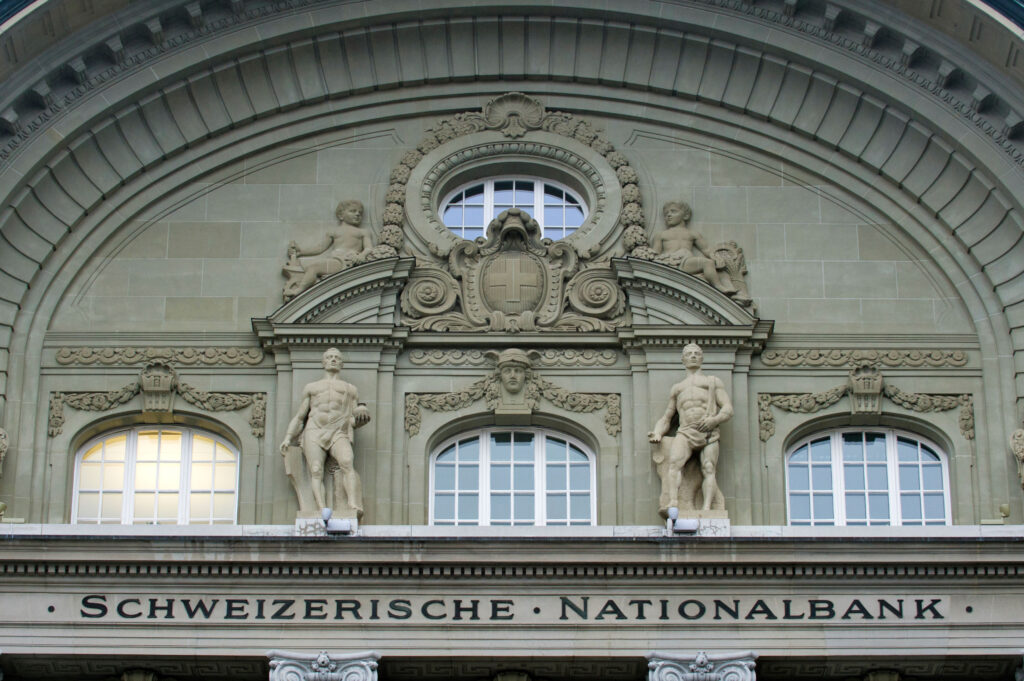
The loss amounts to about 18% of Switzerland’s gross domestic product (GDP) due to foreign exchange losses held due to the rise in the value of the Swiss franc, the Swiss currency.CNBC reported that SNB expects to lose 132 billion Swiss francs (US$143 billion, about KRW 178 trillion) in fiscal 2022. In fiscal 2021, the SNB posted a surplus of 26 billion Swiss francs, but turned into a massive loss in a year.
CNBC reported that this is the largest loss in the SNB’s 116-year history, about 18% of the Swiss GDP estimate of 744.5 billion Swiss francs. The previous largest loss was 23 billion Swiss francs recorded in 2015.
For this reason, the SNB said it will not pay dividends to the Swiss government and member countries, and dividends to shareholders will also be affected.

Of the SNB losses, 131 billion Swiss francs were incurred from the loss of foreign exchange positions held due to the appreciation of the franc. Since mid-June last year, investors have flocked to Swiss francs, a safe asset, trading at a high price of more than 1 euro per franc. Switzerland abolished the 1.2-franc peg system per euro in 2015, and since then, the Swiss franc has briefly soared to more than 1 franc per euro. The Swiss base rate hike also contributed to the Swiss franc’s rise in value. SNBS raised its key interest rate to 1% in December last year. The move was aimed at curbing inflation, which jumped 3 percent last year for the third rate hike.
The fall in the stock market also resulted in losses in the stock and bond portfolios held.
At least, it earned 400 million francs from its reserves.”Despite these losses, the SNB will not change its monetary policy and expects to raise its key interest rate by 100bp (1bp = 0.01 percentage point) to 2% this year,” Karsten Unius, chief economist at Swiss J Safras Saracin Bank, told CNBC. “Switzerland’s inflation was closer to the target of 2% than the eurozone,” he said. “The SNB will also take some time to rebuild its holding value, but it will take less time to make profits than the European Central Bank (ECB).” The SNB will already receive higher market rates this year and the ECB will be unprofitable for years to come, he added.
JULIE KIM
ASIA JOURNAL

