


Korea rolled up its sleeves to shape and actively foster the future industry.
The Korean government has selected 10 so-called “Super Gap” sectors that will lead the global market with unrivaled technologies that competitors cannot overcome, discovered more than 1,000 promising startups, and decided to invest more than 2 trillion won( $1.4 billion) over five years jointly by the public and private sectors.
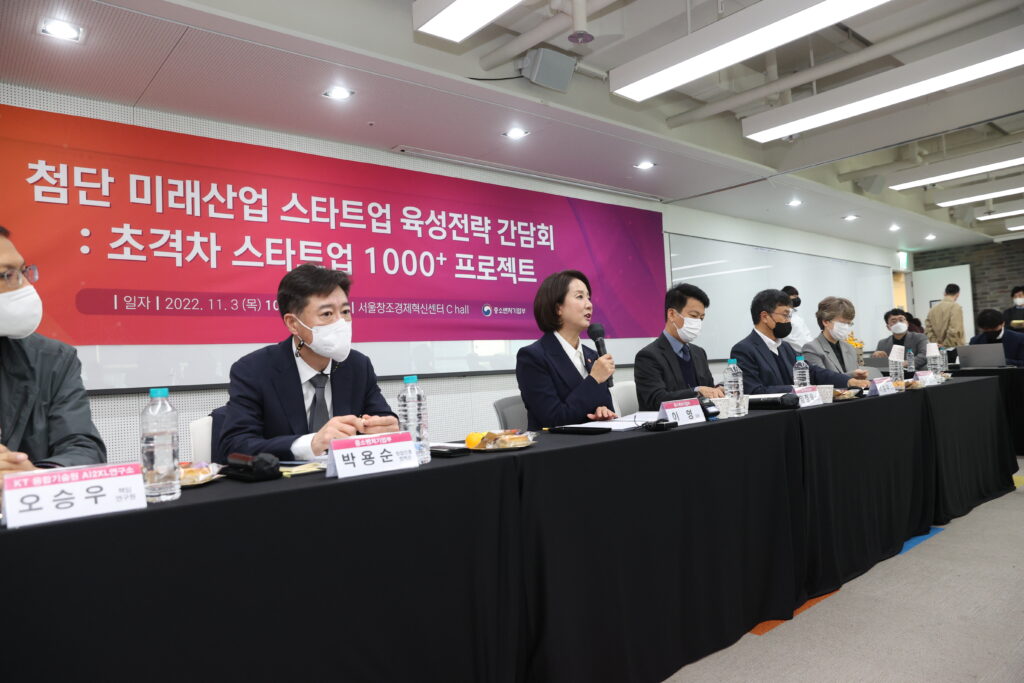
The Ministry of SMEs and Startups of Korea announced Thursday,Nov.3 at the Seoul Center for Creative Economy & Innovation in Yongsan-gu, Seoul, “Strategy to foster high-tech future industrial startups-Super Gap Startup 1000+ Project.”
Among the top 10 promising new industries categorized as the “deep-tech” sector , ▲ System Semiconductor ▲ Bio and Health ▲ Future Mobility ▲ Eco-friendly, Energy ▲ Robot ▲ Big Data, AI ▲ Cyber Security, Network ▲ Aerospace, Ocean ▲ Next Generation Nuclear Power Plant ▲ Quantum Technology were selected.
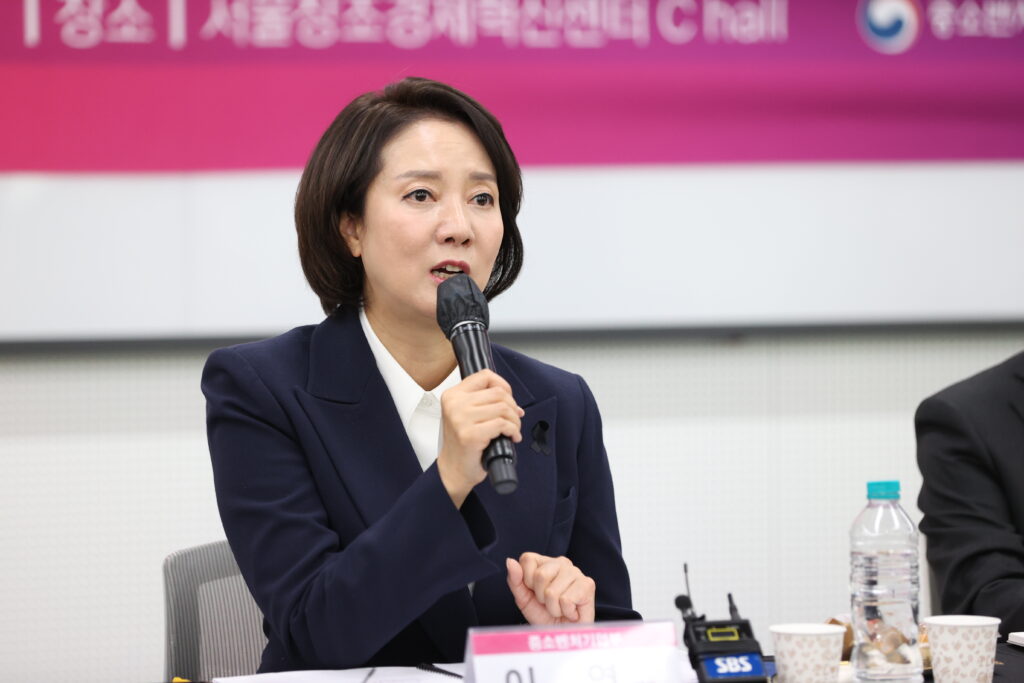
“We have prepared a ‘super-difference startup 1000+ project’ to secure the country’s future growth engine and preoccupy global new markets in response to the transition period of technology and environment,” said SMEs and Startups Minister Lee Young at the meeting.
Through this project, the Korean government selects more than 1,000 promising startups for five years in three ways: ▲ open recruitment ▲ private and ministry recommendation ▲ private investment.
The selected super-gap startup candidates will receive specialized support according to the selection method.
The public and recommended types will provide up to 600 million won($450,000) in technology commercialization funds for three years after selection so that they can upgrade their technology and connect it to commercialization.
In addition, there will be an R&D program that will support up to 600 million won for up to two years.
Private investment types provide R&D funds of 1.5 billion won($1.1million) for up to three years after being selected to support growth potential. It can also support up to 100 million won($71,000) each for start-up commercialization and overseas marketing costs.
A total of more than 2 trillion won will be invested in super-gap startups, which will be selected for five years, including the government’s technology commercialization and R&D funds and private investment funds.
In addition, it has been targeted at start-up support policies only for less than seven years, but based on the newly revised Small and Medium Business Start-up Support Act, it has decided to expand the scope of support to 10 years.
Top core companies that have received large-scale investment from the private investment market after basic support or have achieved delivery contracts with global companies can receive separate follow-up commercialization funds.The selection scale is around 20 companies per year, and selected companies can receive up to 1 billion won($ 800,000) in commercialization funds for two years to promote global scale-up.
The government will also create a 110 billion won($90million) “super-difference fund” to promote private investment in promising new industries. It will also push for full-fledged scale-up support by expanding the “global fund” that will flow in overseas capital from about 6.3 trillion won($4.5 billion) to 8 trillion won($5.5 billion ) by the end of next year and preferential policy funds and guarantees for super-difference startups.
“It is startups that lead the future of the national economy,” Minister Lee Young said. “We will make sure to create super-gap startups that lead the global market by investing intensively in high-tech future industries with high potential for future growth.”
DOUG HWANG
staff writer

