


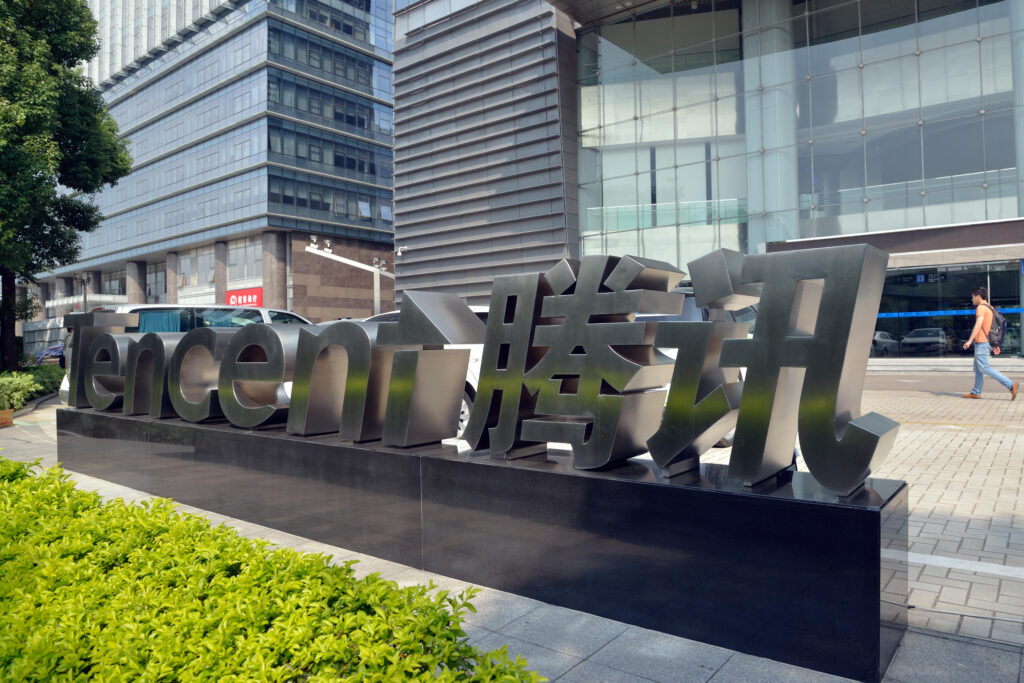
(Source from Reuters/Alamy)There are continuous reports that Tencent, China’s largest Internet company, will sell its stake in major companies it has invested in.
Tencent denied it, but industry analysts say it is highly likely to liquidate its stake given the authorities’ monopoly regulations and plans to purchase treasury stocks.
Citing sources, the Wall Street Journal (WSJ) reported on the 20th (local time) that Tencent is considering selling shares of China’s largest food delivery company, Meituan, real estate broker KE Holdings, and ride-hailing company Didi Chuxing.
The purpose is to raise funds for treasury stock purchases and new businesses. WSJ estimated that the value of Tencent’s stake in the three companies, which are considered to be sold, reached $29 billion.
Tencent, listed on the Hong Kong stock market, is China’s largest company in terms of market capitalization.
The market capitalization reached HK$2.8 trillion the previous day. However, stock prices have fallen by 35% in the past year due to regulations on Big Tech (large information technology companies) by the Chinese authorities.
South Africa’s largest shareholder, Naspers, announced plans to sell Tencent shares on June 28th, which is also a negative factor in stock prices.
Tencent is defending its stock price by purchasing treasury stocks. From June 28 to September 19, treasury stock purchases totaled HK$11 billion.
Tencent has $26.3 billion in cash and $17.7 billion in deposits as of the end of June. However, the debt is also $48 billion, so the net debt amounts to $2.9 billion.
Tencent denied the report.
“We don’t need any additional funds at the moment and we don’t have any plans to sell them,” Tencent said.
Tencent has been investing the profits of the company and shareholders first, and there are no other schedules or goals, he stressed.
Tencent also responded that it was not true when Reuters reported last month that it would sell its stake in Meituan.
Market watchers continue to expect Tencent to adjust its wide investment portfolio.
The Chinese government’s tightening of anti-trust regulations is also cited as a reason for the need to clean up investment.
Tencent paid $16.4 billion worth of shares of China’s second-largest e-commerce company Jingdong Dotcom as a special dividend to shareholders in December last year.
It also disposed of $3 billion worth of shares of Singapore’s e-commerce company in January.
HS HA
ASIA JOURNAL

