


The plan for the 2026 asteroid impact-orbit change experiment was announced.In fact, China announced that it was tired of the DART mission in the United States.
The goal is the same as a defense against close-up threat objects on Earth, and the U.S. is poised to catch up with the U.S. by calling it a “space bump,” two years ahead of the Mars sample return race
“The U.S. is doing it, but China is also planning it right away.” China, which is pushing for a space flight, has claimed to be a “Earth Guard” like the U.S. The plan is to test defense operations in the event of an asteroid hitting the Earth.
According to Space News on the 14th, Long Lehao, the chief architect of China’s Changjung rocket series, said in a recent lecture that he plans to conduct such an experiment on 2020 PN1, a near-earth asteroid, in 2026. The 2020 PN1 asteroid was discovered in 2020 and is known to be about 40 meters in size.

China will launch two observation and impact satellites on the Changjeong 3B rocket in 2026, approach the asteroid, apply physical impact, and conduct an experiment to observe it.
This is virtually the same experiment as the DART mission launched by NASA in November last year. The DART mission is to change its orbit around September next year by physically impacting the twin asteroids Dimorpos and Didimos 10.78 million kilometers from Earth. In other words, it will test whether it can change its orbit or destroy it by giving a physical impact to asteroids that are likely to collide with the Earth. The scene of the crash is filmed and transmitted by the accompanying Italian space agency’s cube set. In addition, three years later, the European Space Agency (ESA) will launch a HERA observation satellite to conduct further research.
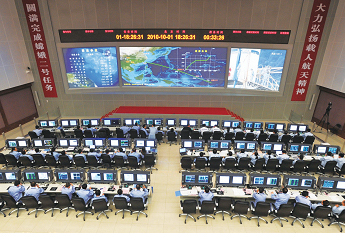
Earlier, China’s National Aeronautics and Space Administration (CNSA) announced in April that it would conduct such a “global defense experiment,” but did not specify the timing and target. CNSA had only announced that it planned to establish an early warning system for threatening objects in close proximity to the Earth, while also preparing countermeasures.
Meanwhile, China has been actively exploring and developing space by constructing its own space station, exploring the moon and Mars, and collecting samples after declaring its “space rise” in the late 2000s. China’s space development budget for 2021 totaled 9.125 billion dollars, the largest in the world except for the U.S. (48.637 billion dollars). Our country is only 616 million months old. In particular, China is determined to win the competition with the U.S. to retrieve samples from Mars. China recently announced that it plans to retrieve samples taken by Rover “Zhu Rong,” which succeeded in landing on Mars last year, one step ahead of the U.S. However, it is known that the U.S. will not be able to do it until 2033, due to a lack of budget.
JENNIFER KIM
ASIA JOURNAL

